🗓️ December 18, 2025
🏁 Kilometers : 1306
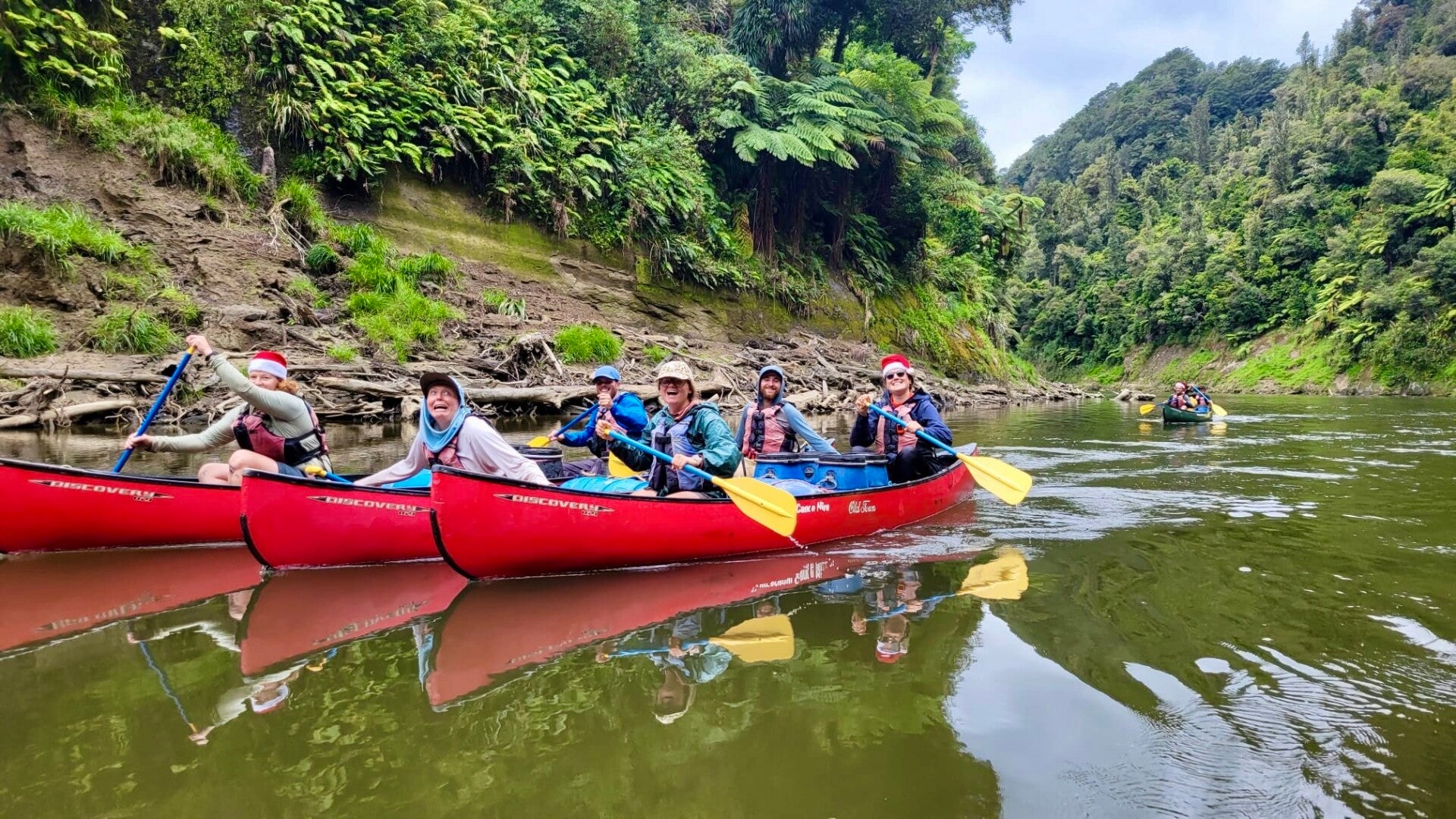
Today marks the start of one of our biggest challenges: a 5-day canoe trip down the Whanganui River. It rained a bit overnight, but the morning is clear and crisp. We're a group of thirteen, and we all know each other very well now. We've chosen the same day for our canoe trip, knowing the atmosphere will be fantastic!
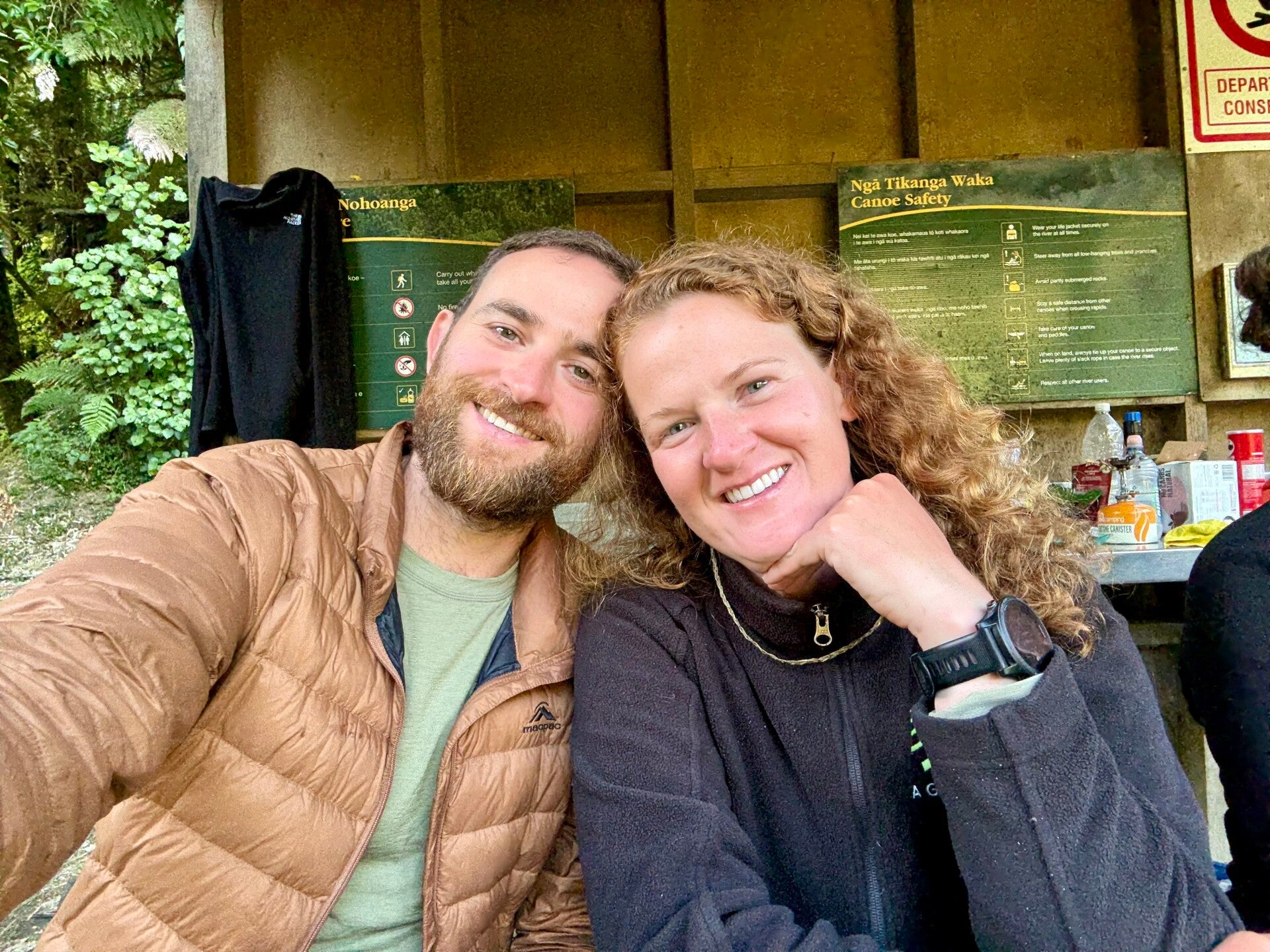
I don't always mention the people I spend my days with so as not to overwhelm you with names, but I'll make an exception today: I've already spent a lot of time with each of them and particularly enjoy their company. I'll list them briefly since I'll be doing the river trip and spending Christmas with the same group: we have Greg and Ashley from the United States, as well as Jolly and Natalie, also from the USA, Ellen from Australia, Matteo and Ivan from France, Anouk and Sander from the Netherlands, Julia from Spain, Nate from New Zealand, and Ida from Denmark.
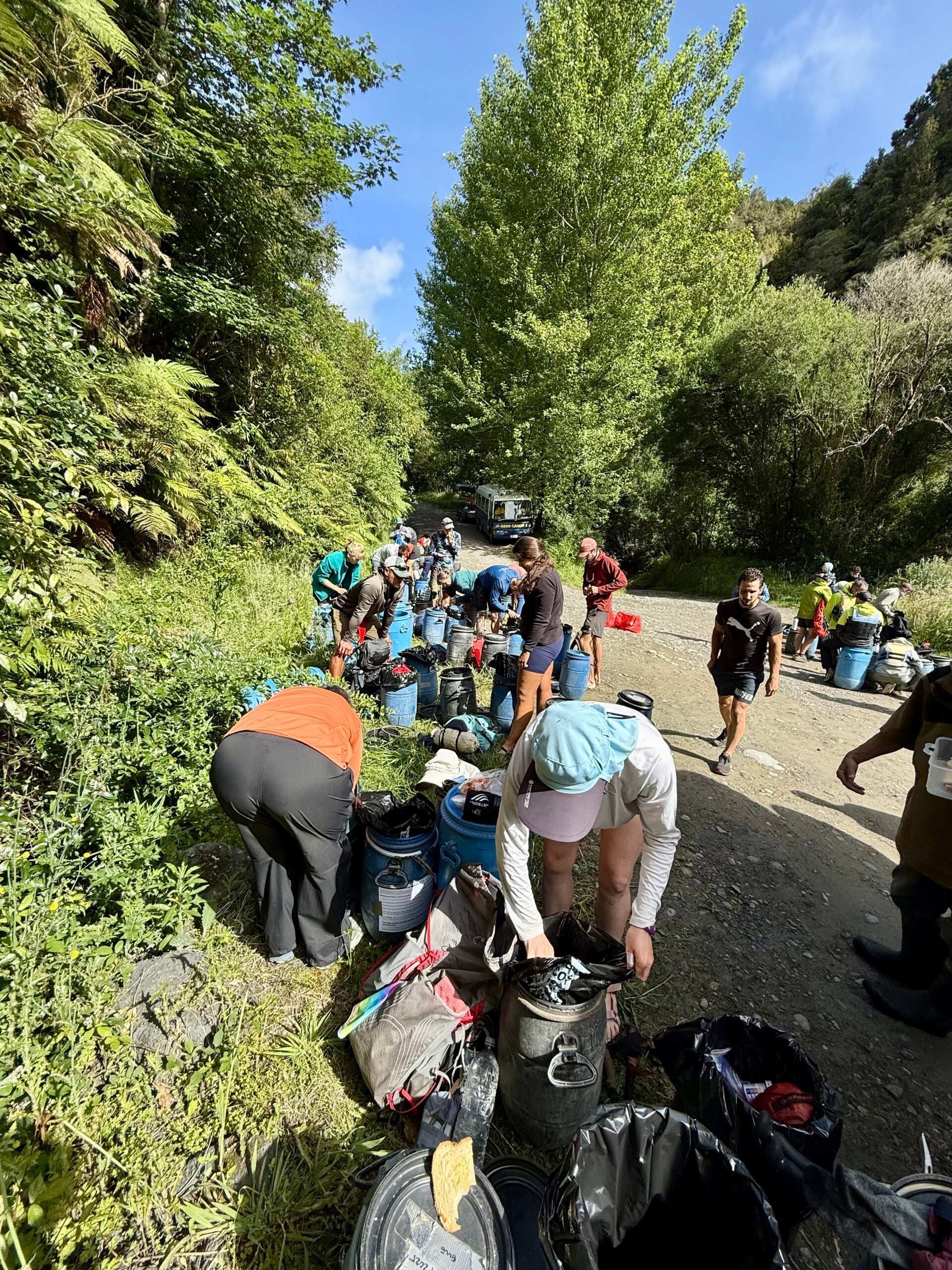
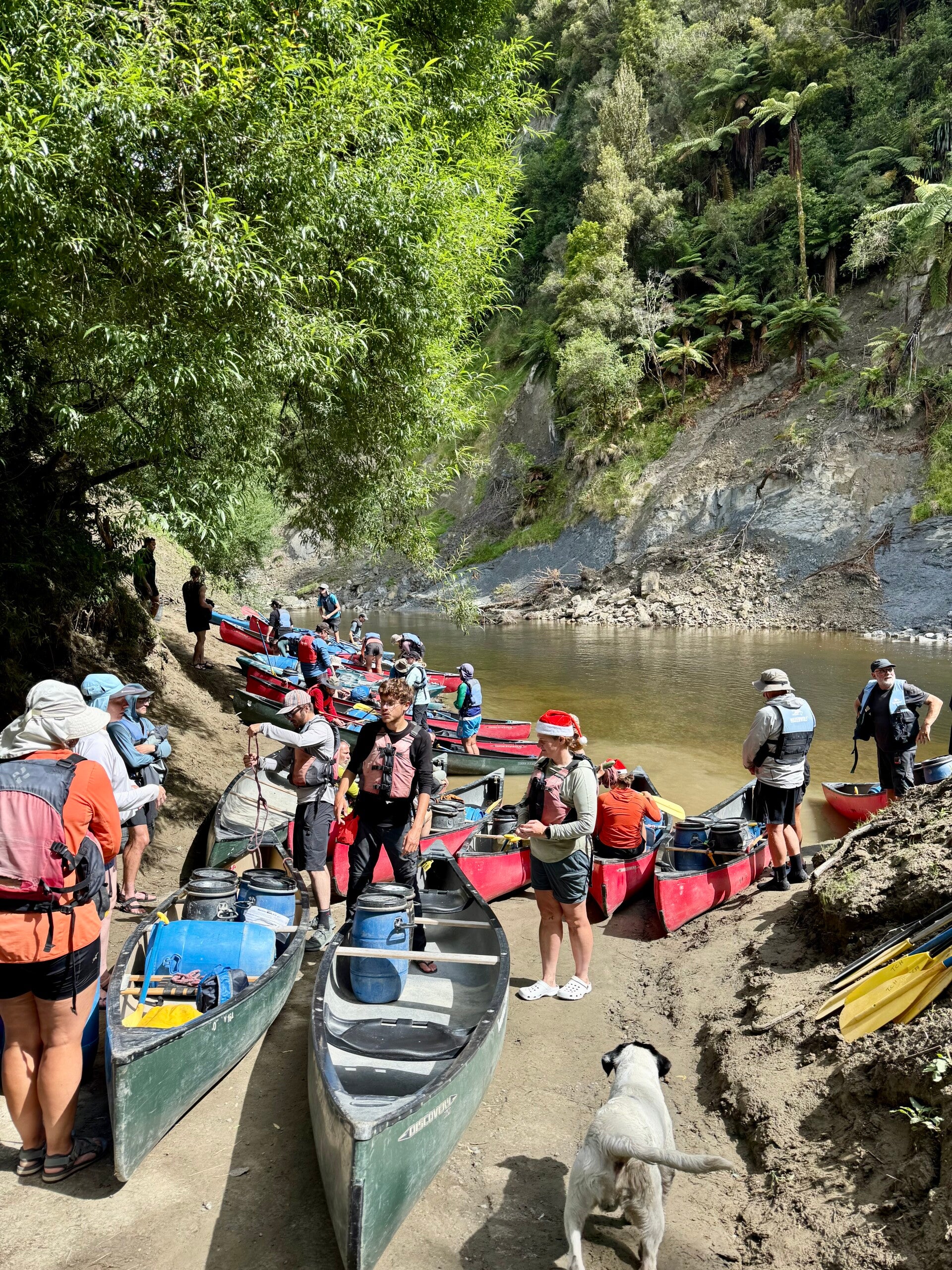
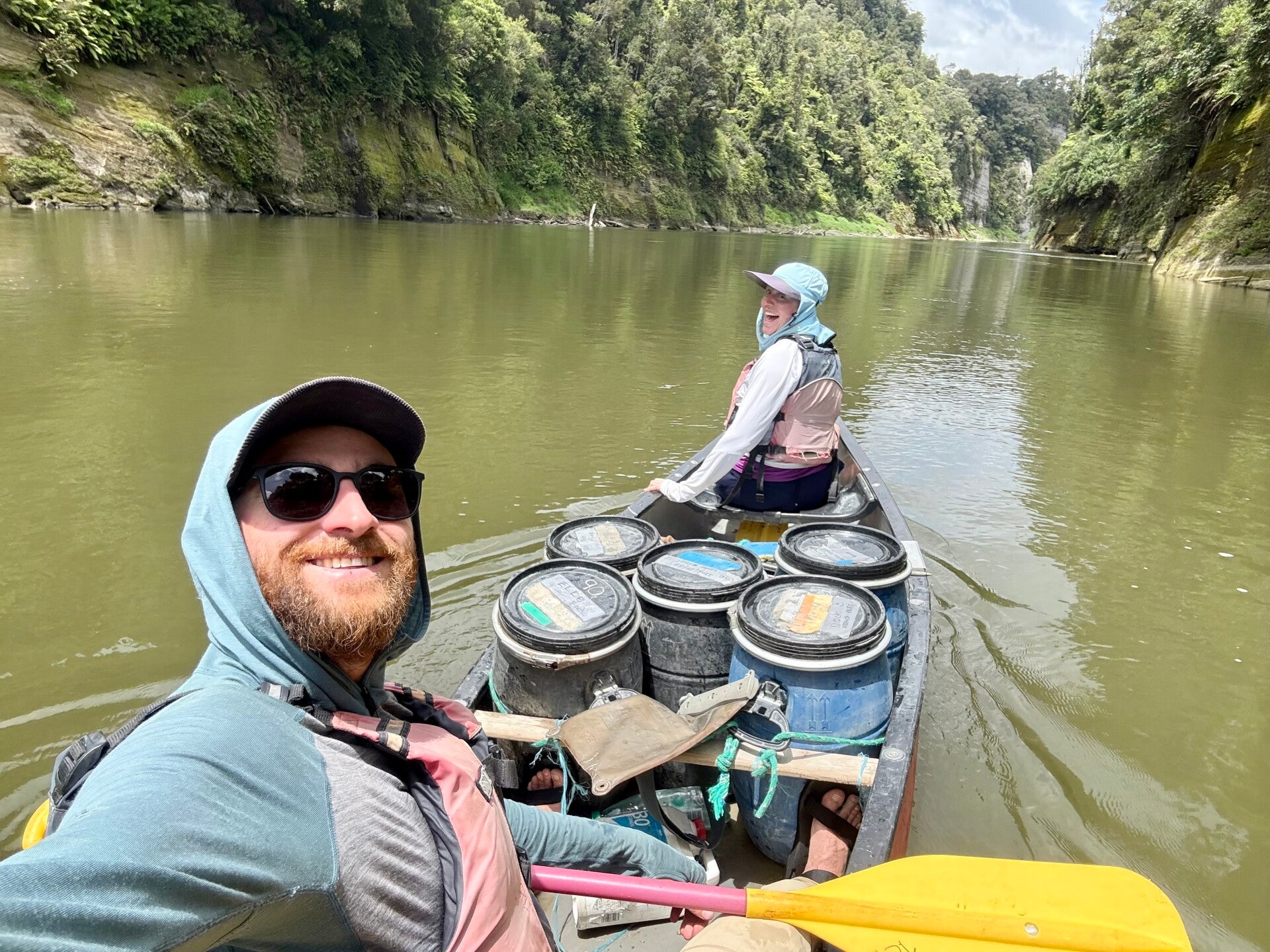
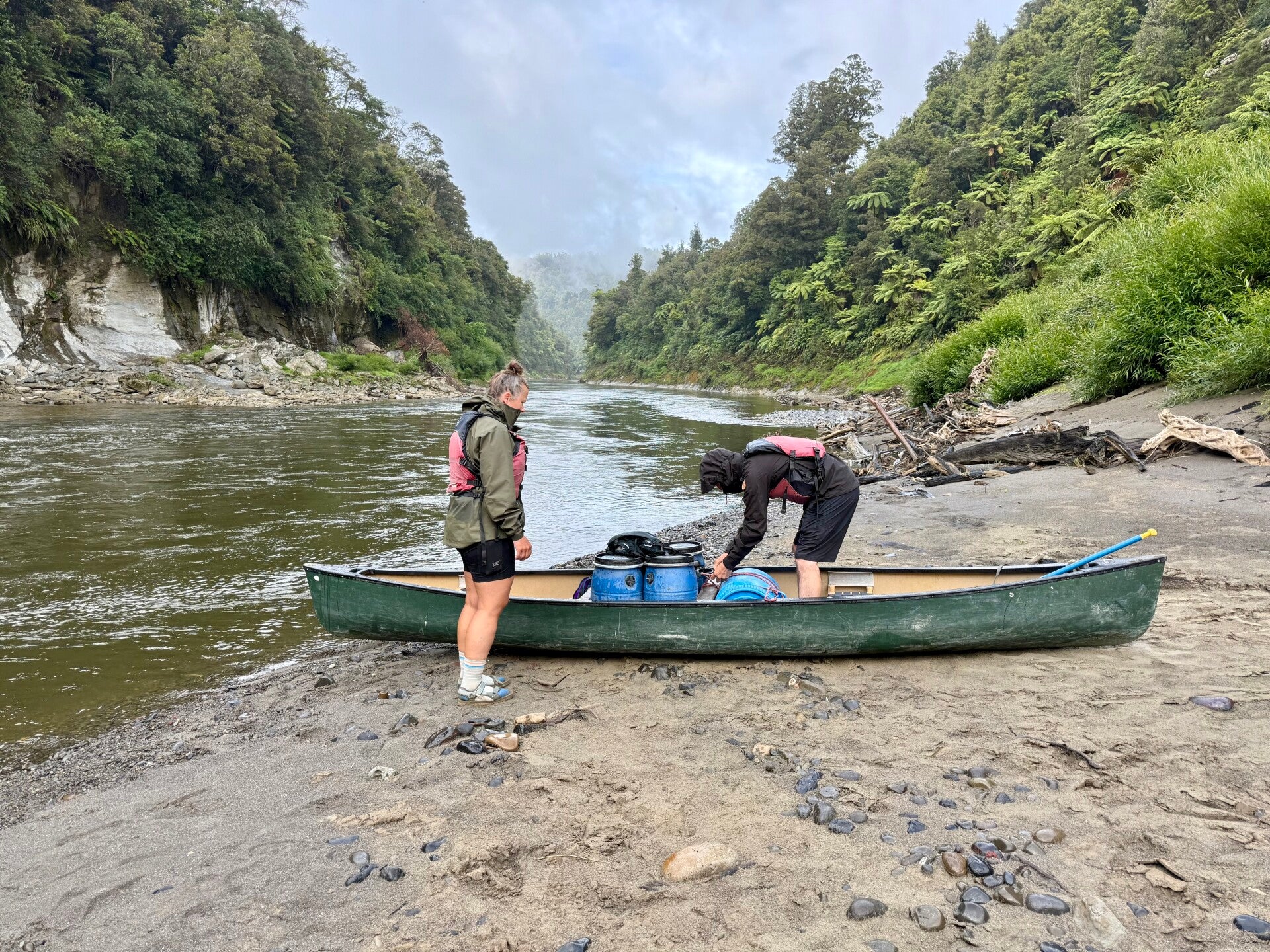
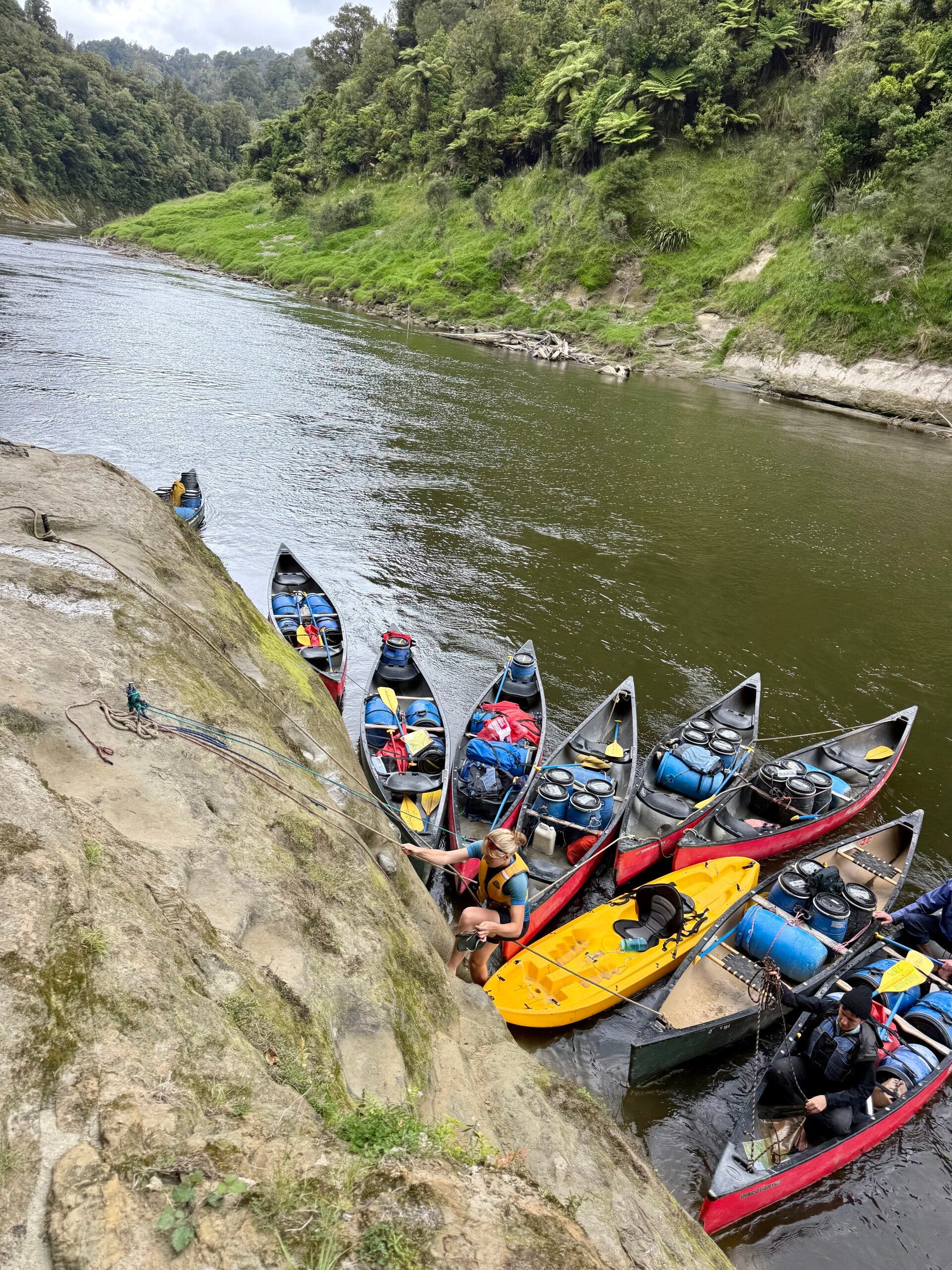
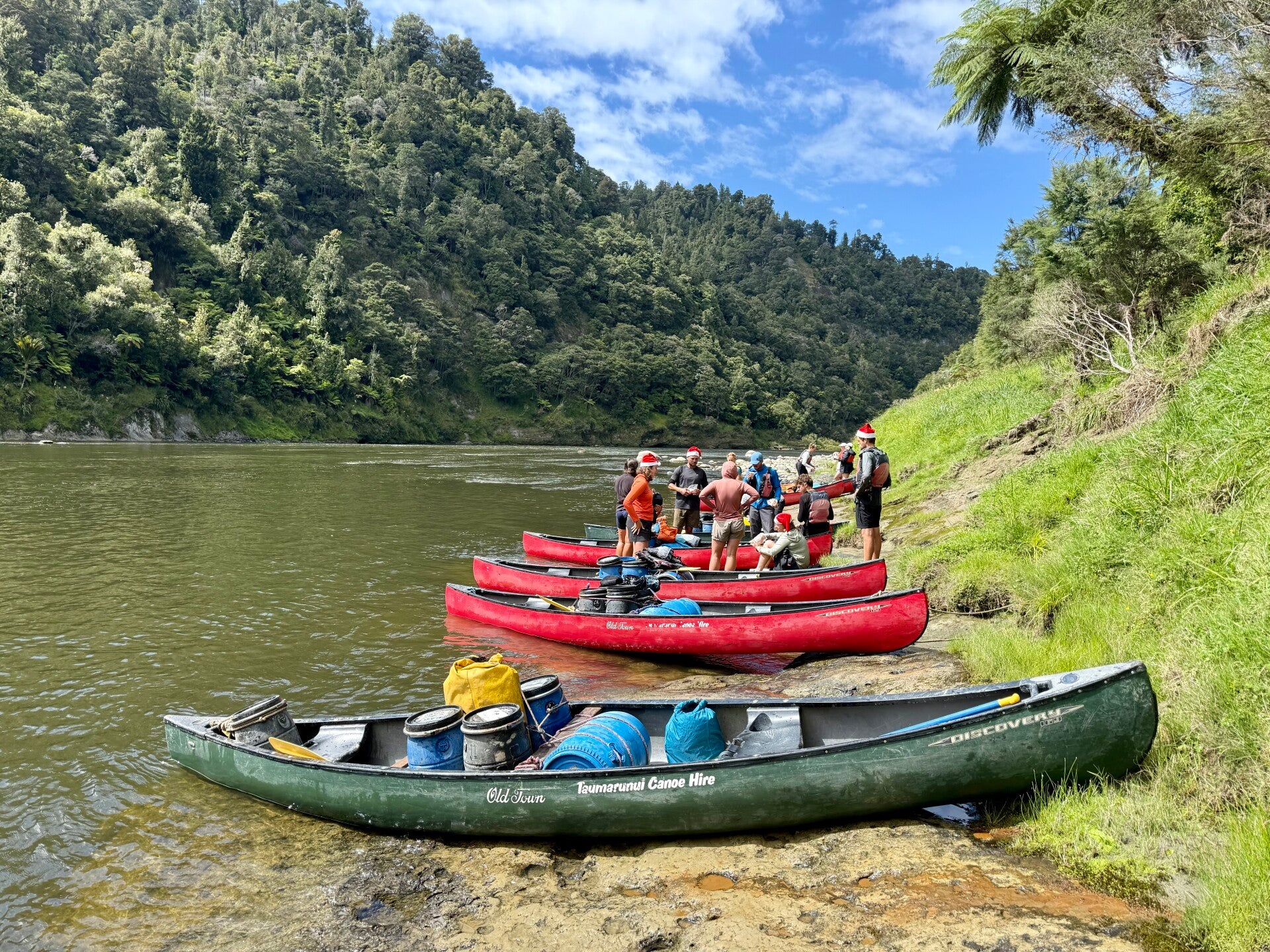
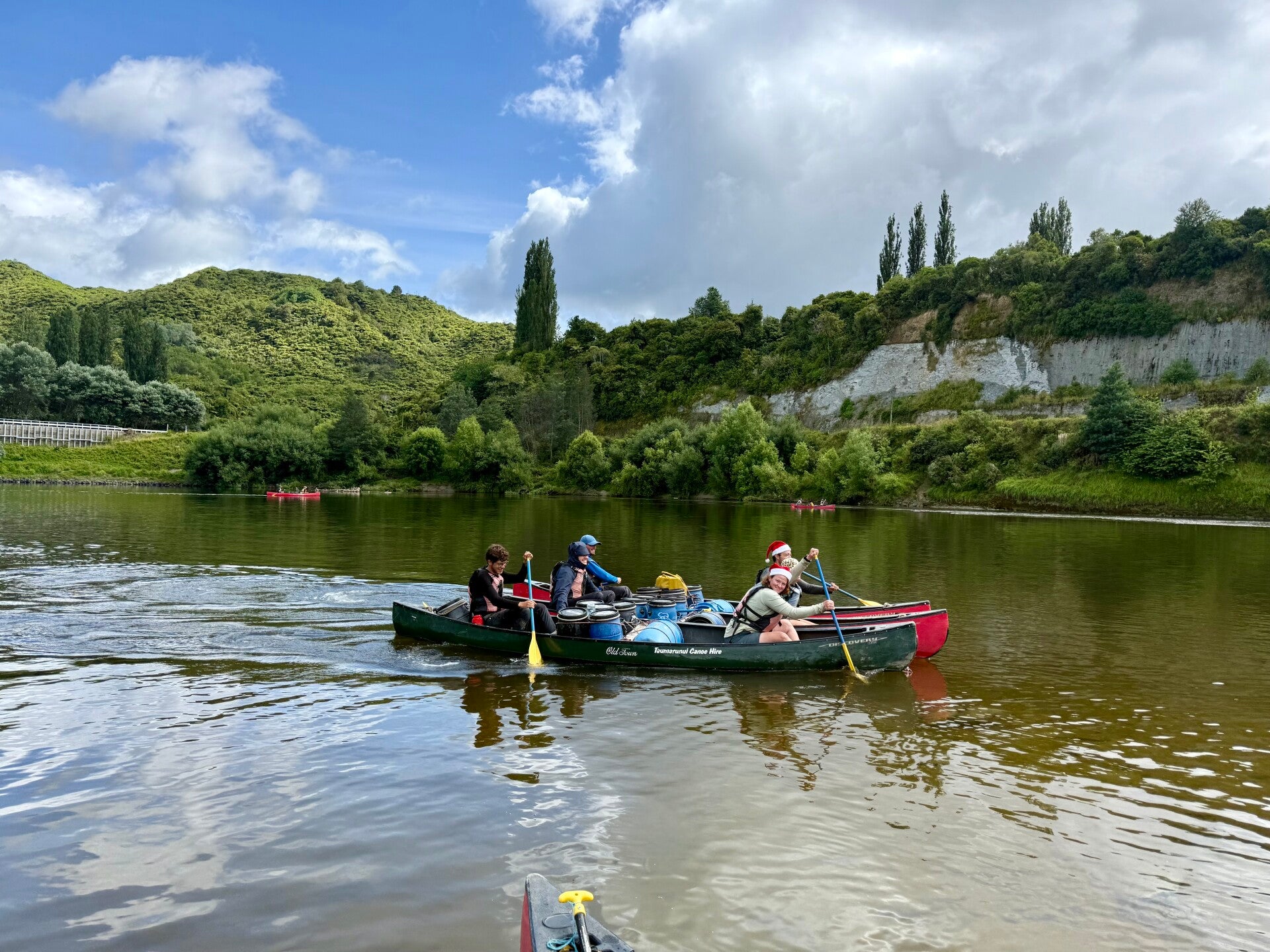
The company renting us the boats arrives around 9:30 a.m. A sort of joyful cacophony ensue as everyone retrieves their food barrel, which we had dropped off at the company's premises about ten days earlier, as well as a small empty barrel to hold the contents of our backpacks. Imagine forty or so people unpacking their bags simultaneously to fit them into their small barrels, then securing them to the boats we share with a partner. The techniques for harnessing the barrels varie greatly and are more or less effective. We each have to equip ourselves with a life jacket, ropes to moor the boat, a bucket to bail out any water that might accumulate during the descent, and three oars (an extra one just in case). We jump into the water, and the great adventure begins !
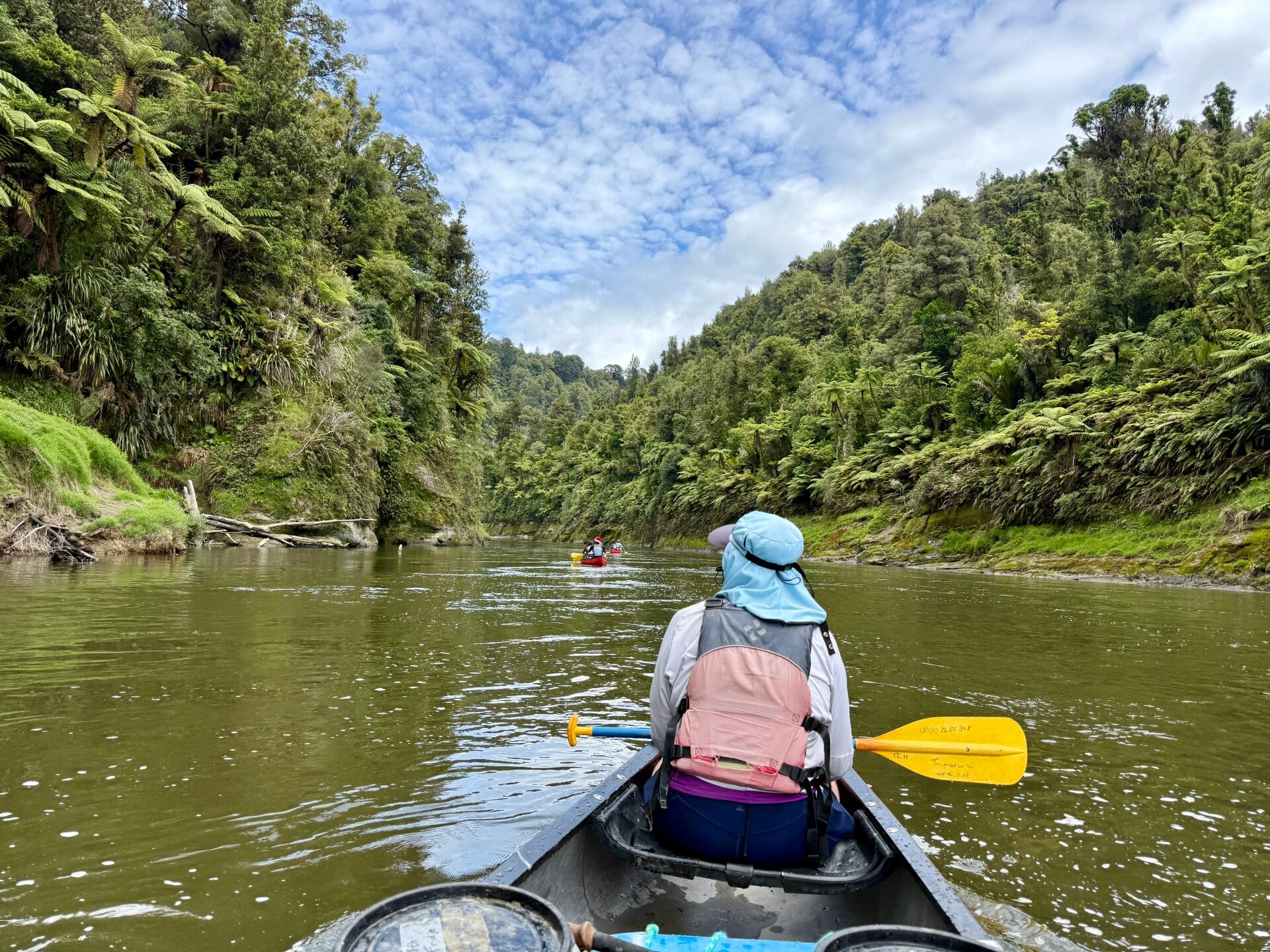
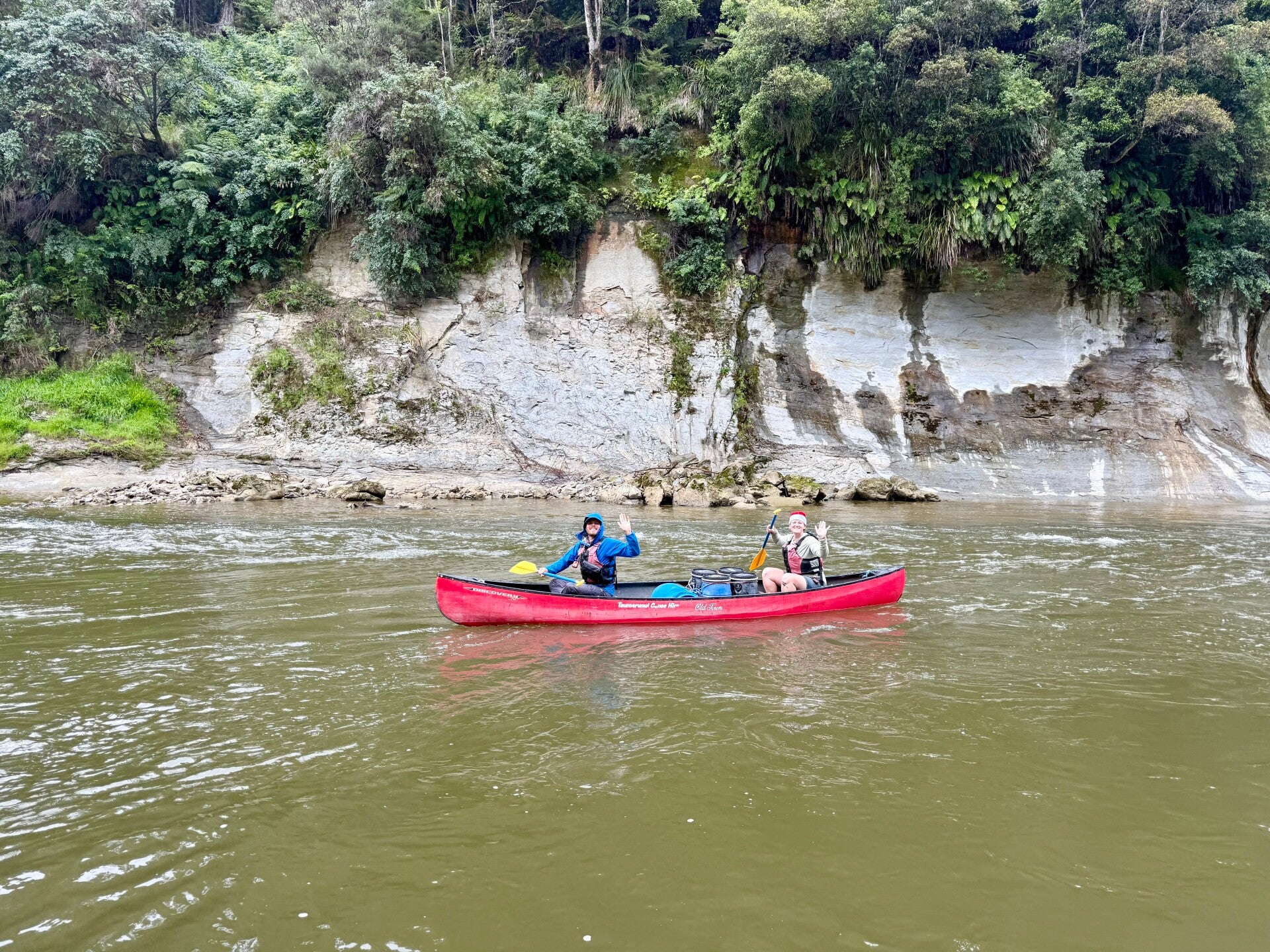
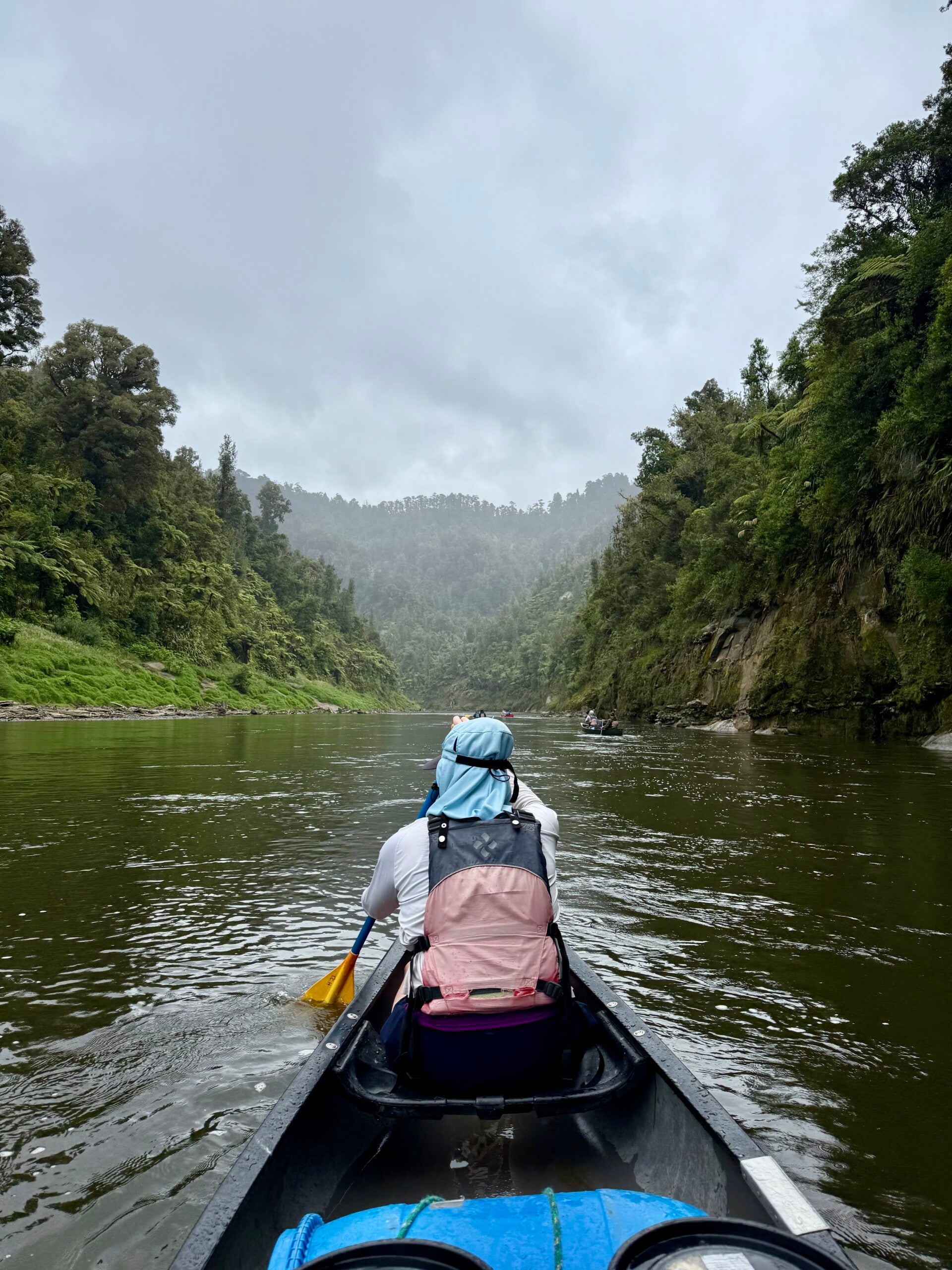
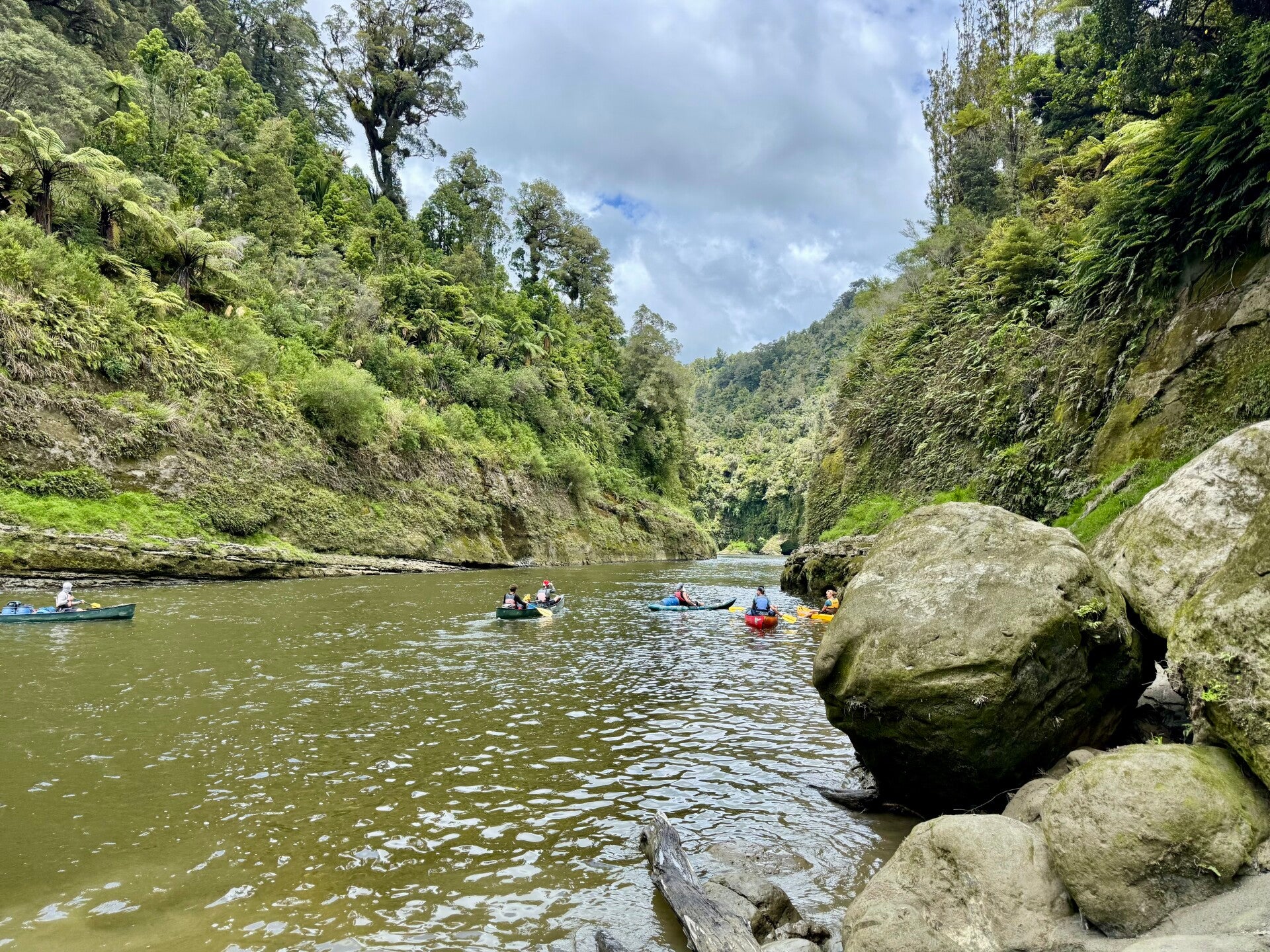
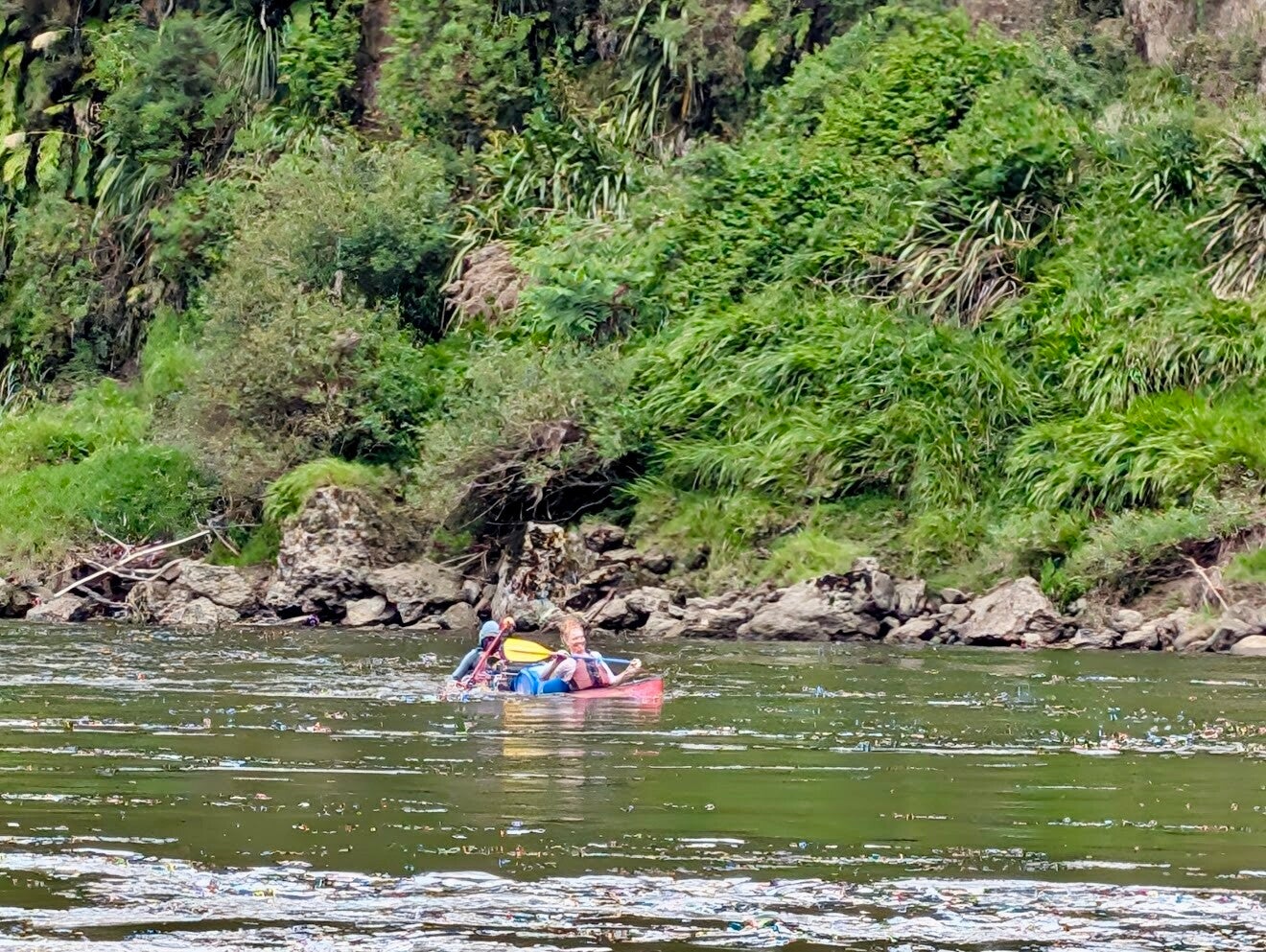
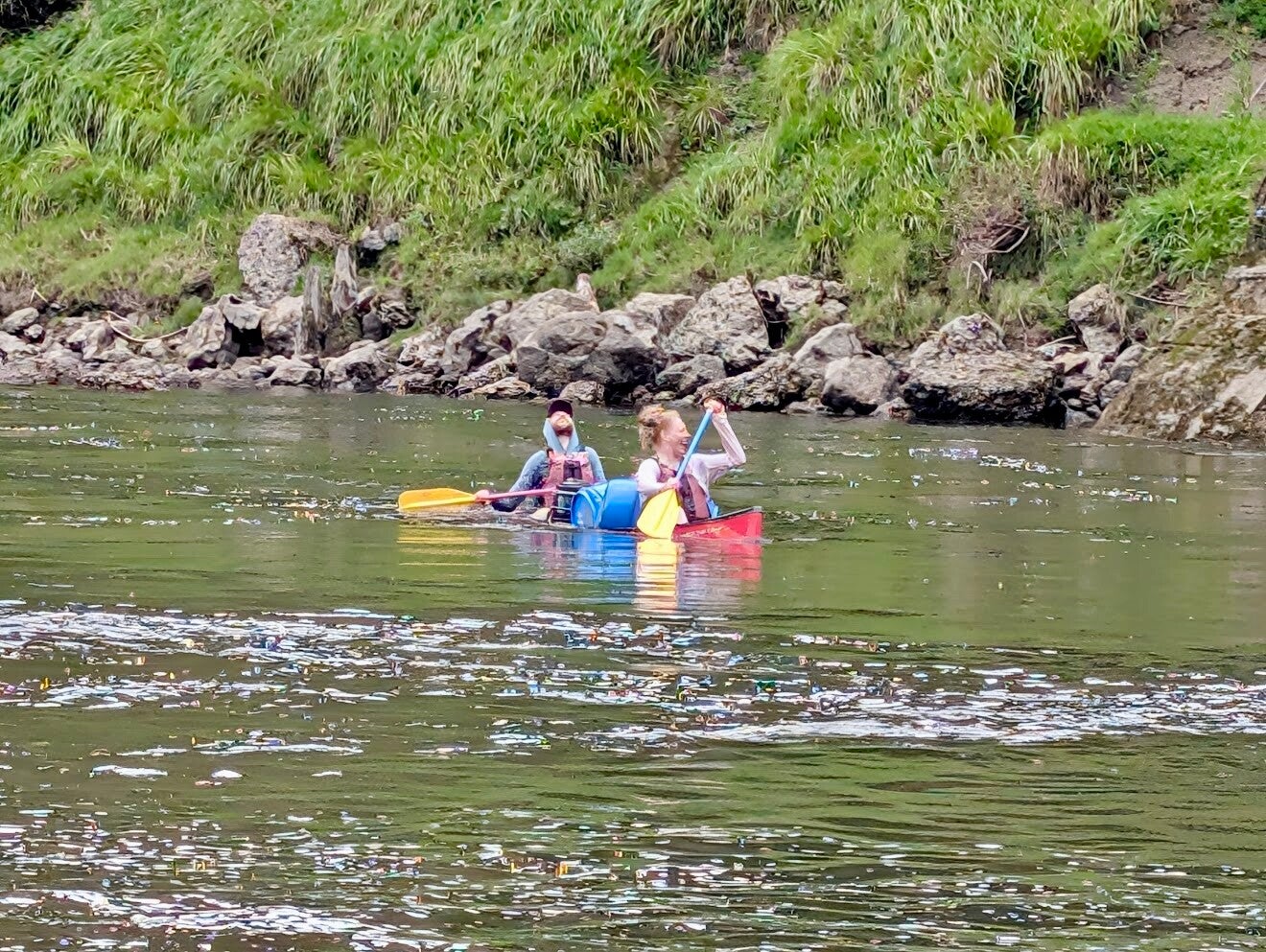
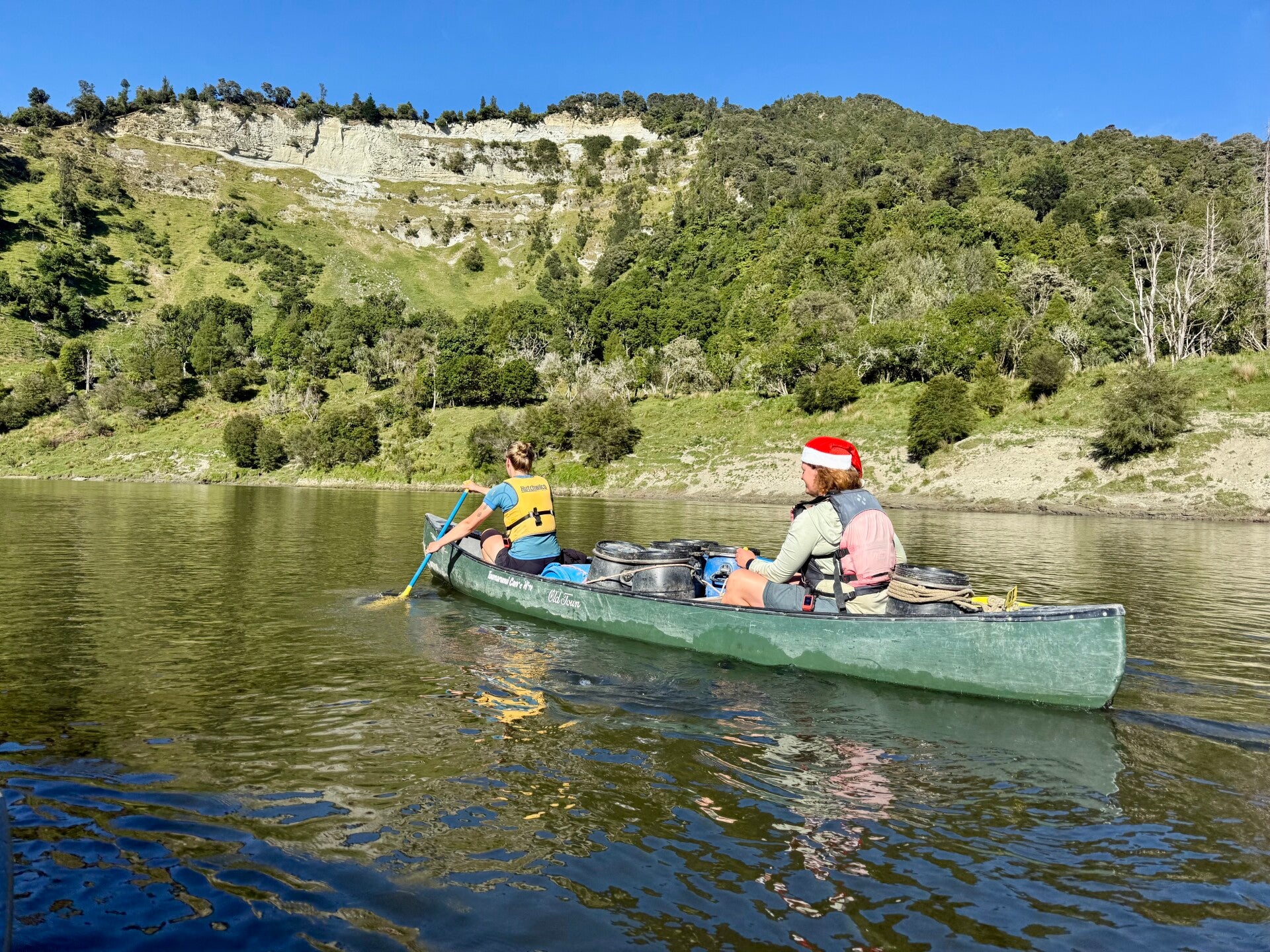
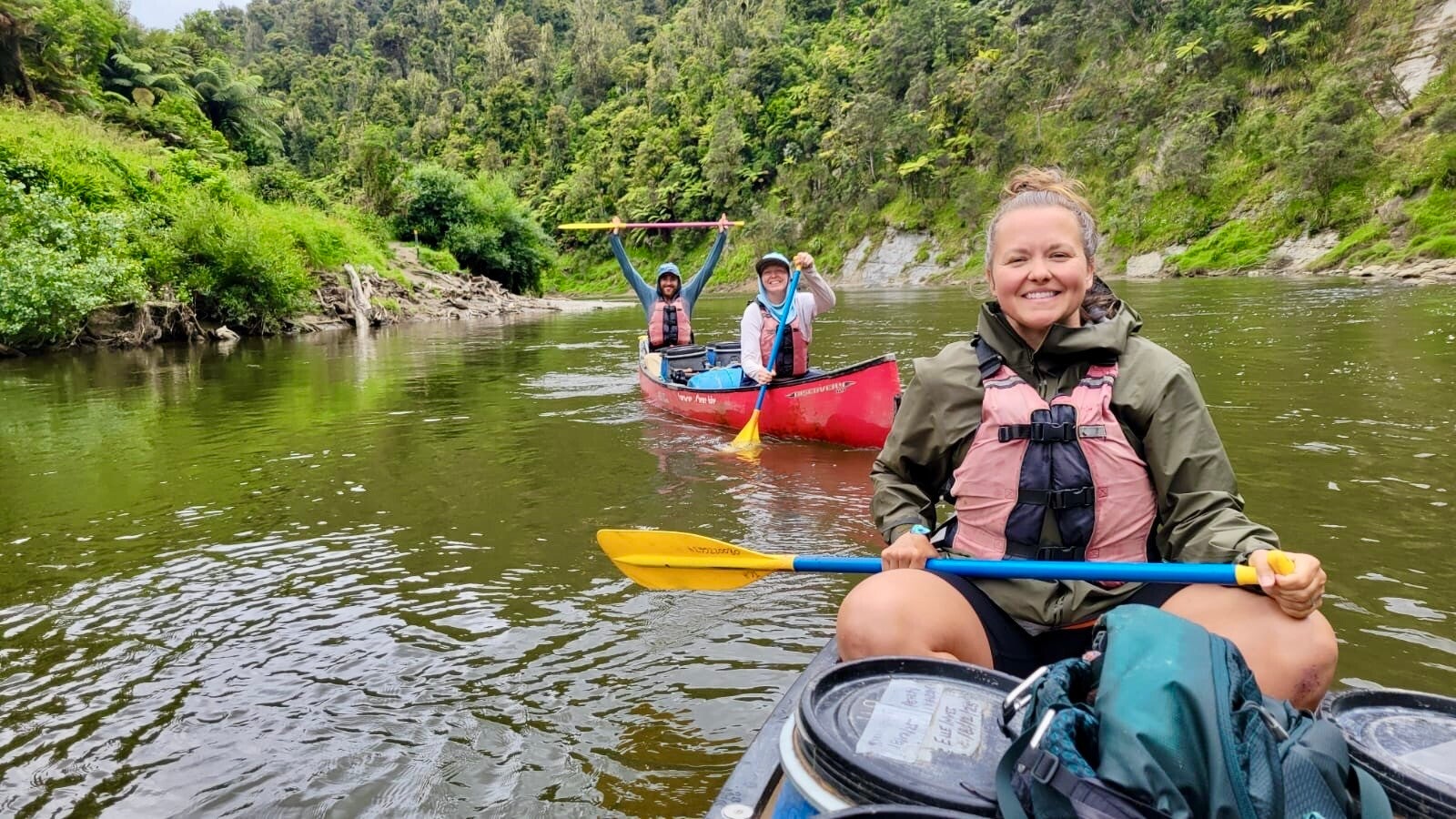
I team up with Ellen from Australia, and being the most confident on the water, I take the stern. The canoes we are using rock quite easily, but by managing the center of gravity, it's relatively easy to find a good cruising speed. The river is wide and the current is fairly calm, and after just five minutes, we're already approaching the first rapids. All you have to do is let yourself glide while paddling, and you're good to go! My partner isn't entirely confident in her ability to handle the rapids and vents her stress verbally, which I find very amusing. Every 300-400 meters or so, we reach a new section of rapids, which makes the descent more exciting and allows us to pick up speed.
Numerous tree trunks litter the banks or are even sometimes in the middle of the riverbed: these represent the greatest danger because many branches pop up in several places and, with the force of the current, can capsize the canoe and/or even impale you. Being in the back, I'm the only one in control of the boat's direction, so it's my job to avoid any obstacles.
We're off to a great start, but then we come to a slightly more technical rapid. The strong current is pushing us straight towards a rock wall, and I'm supposed to turn the boat to the right. However, while using my paddle as a rudder, I misjudge the direction, and instead of turning, we head straight for the wall, which we crash into head-on. Ellen screams, and when we hit it, I see her leap from her seat! But it's more of a scare than anything else; we maneuver the boat right away and continue downstream with the current, laughing uncontrollably.
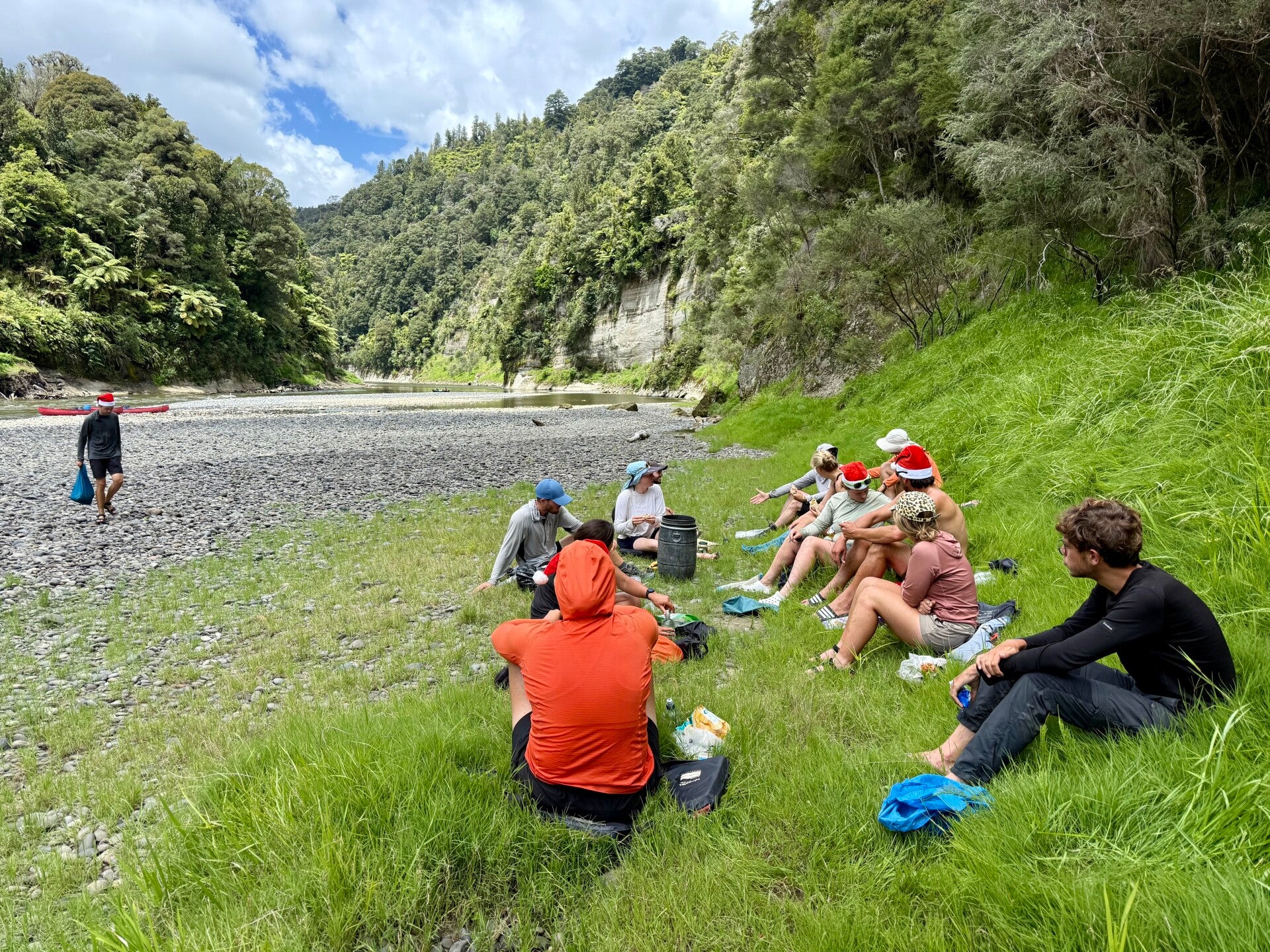
We take our lunch break after about fifteen kilometers, knowing that we still have another thirty kilometers ahead of us in the afternoon. We set off again, our spirits still high, and speed along the water, carefully navigating the obstacles. After another ten kilometers or so, Ellen and I are at the front of the pack, but seeing few canoes behind us, we decide to take a break. Of the thirteen in our group, only six are present, and we wait for the other seven for almost an hour. We get some news from other people paddling down the river, who describe a scene of chaos with capsizing and canoes ending up in a pile of driftwood… we hope no one is hurt. When they finally arrive, we can see the dejected looks on some of their faces. They tell us that one of the boats had hit a hidden trunk underwater and immediately capsized, crashing into some stranded trees, and that the next boat, following too closely, had sped straight at them, adding to the already existing mess; Good luck trying to pull out a canoe that's stuck in the current!
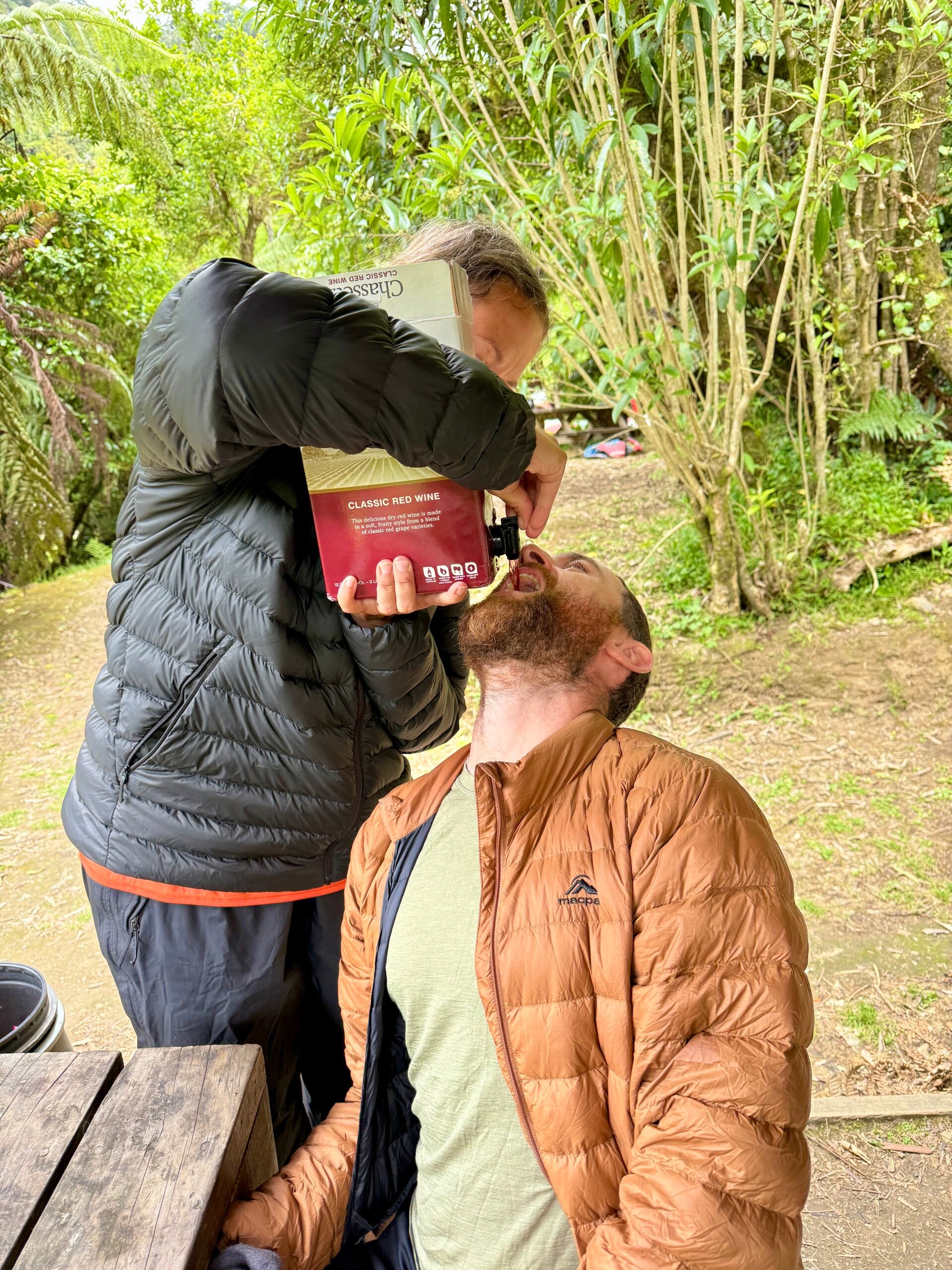
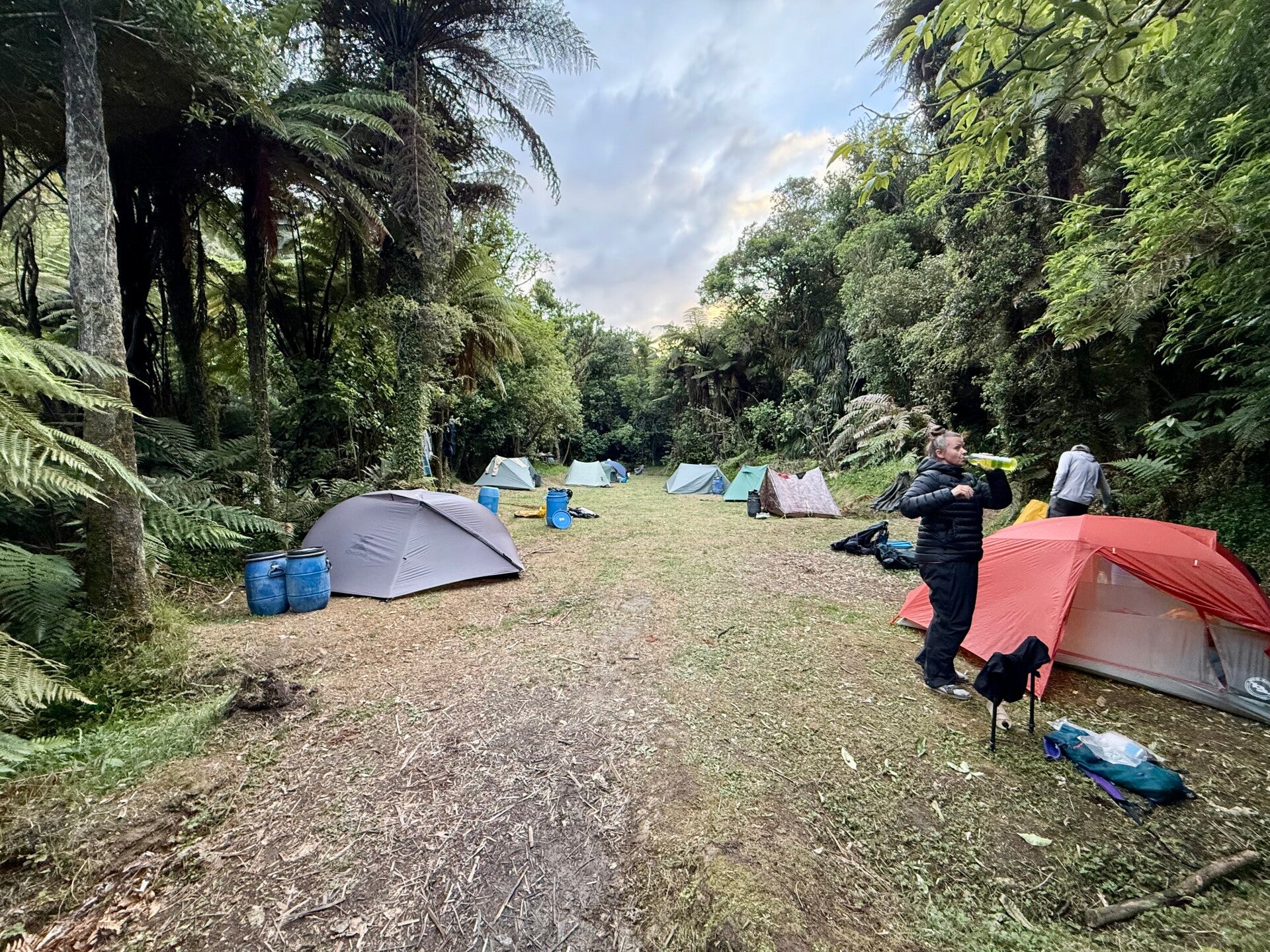
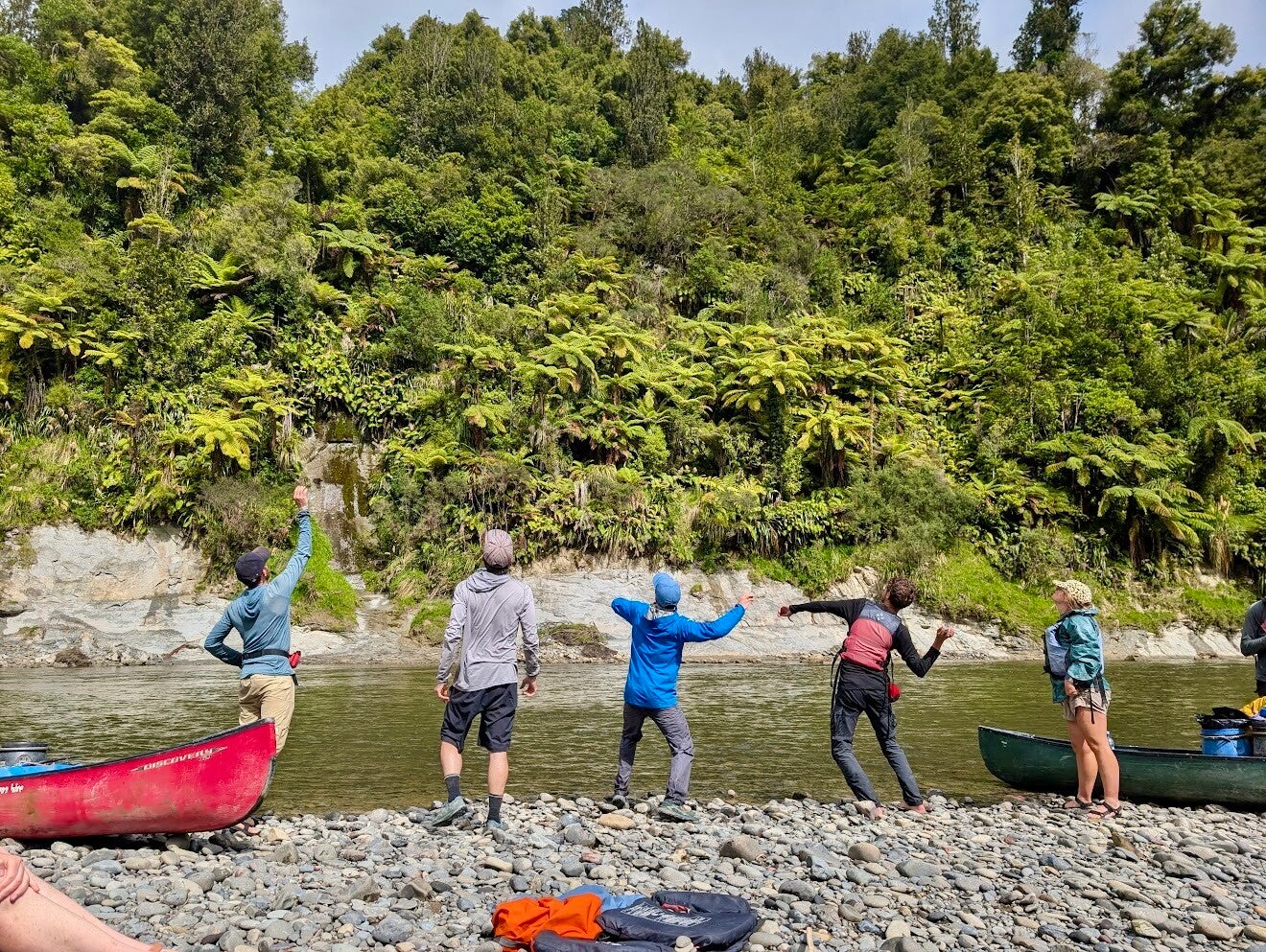
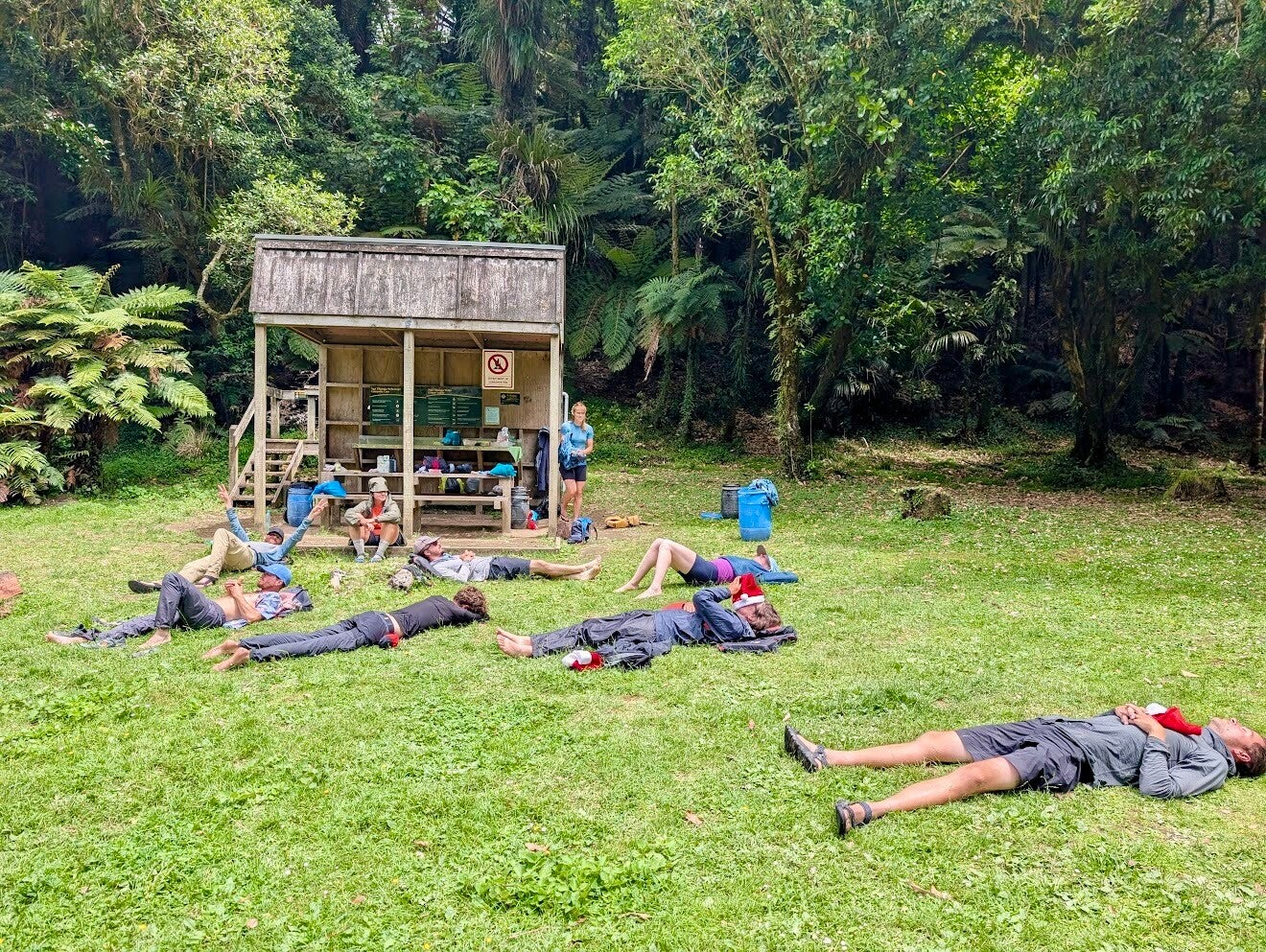
We are lucky enough to take our break on the beach at a campsite where it's possible to spend the night, we were supposed to paddle another twenty kilometers or so downstream, but it is getting late and we can tell the castaways are still a bit shaky. We tie up our canoes, retrieve our barrels, and haul everything up onto the riverbank to set up camp. We enjoy a proper aperitif, worthy of a first day on the water; we have all brought alcohol in our packs, for once we can afford it knowing we don’t have to carry it on our shoulders! The atmosphere is fantastic, and the laughter is constant!
I havn't laughed so much in ages!
🗓️ December 19, 2025
🏁 Kilometers : 1328
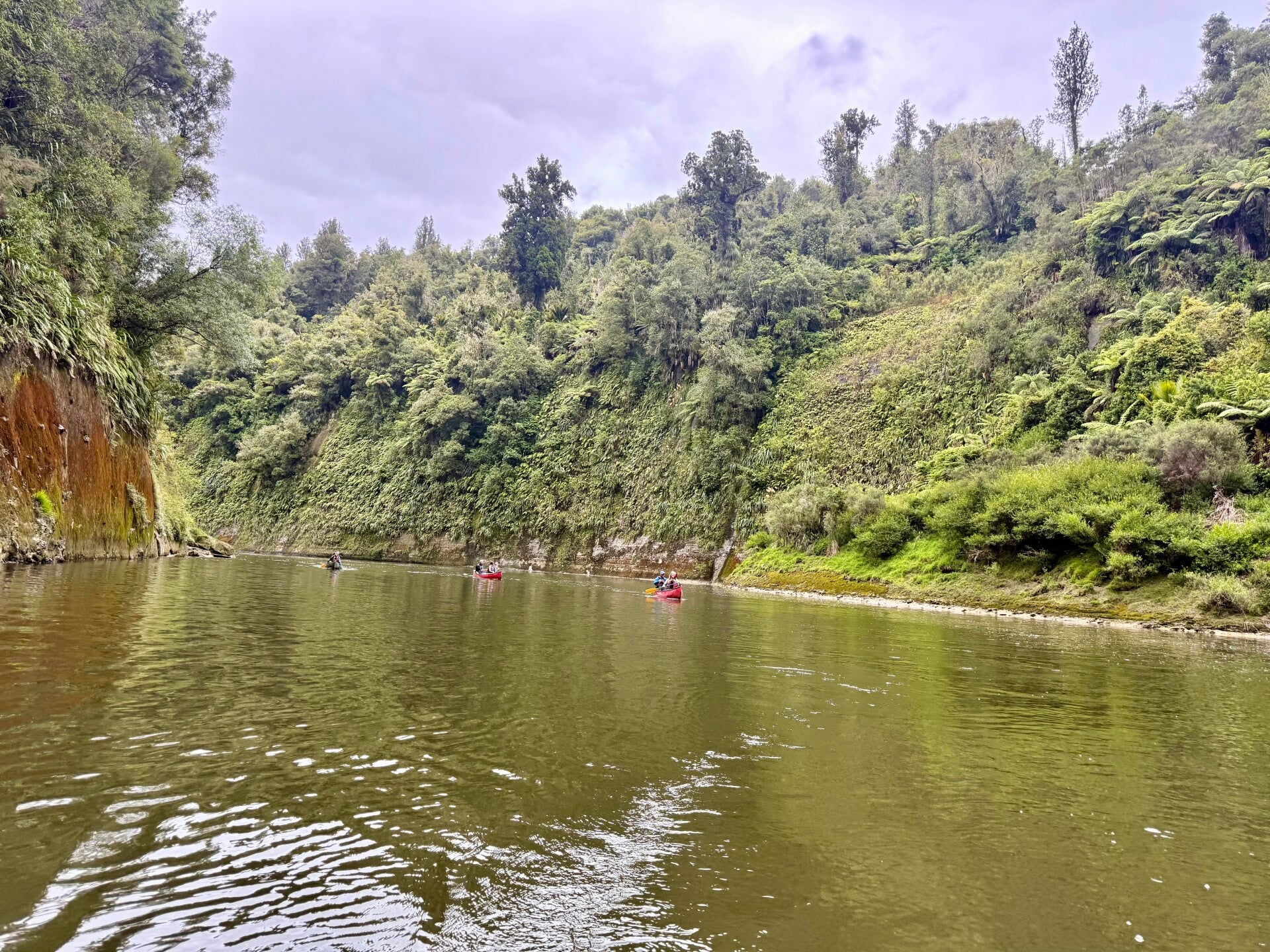
Our second day of canoeing begins under a light rain that will accompany us almost all day. We set off around 8:30 a.m., keeping the same partners as the day before. Our techniques are starting to become more refined, even if we still have a few close calls. There are far fewer rapids as the river widened; less chance of capsizing, but also a little less fun.
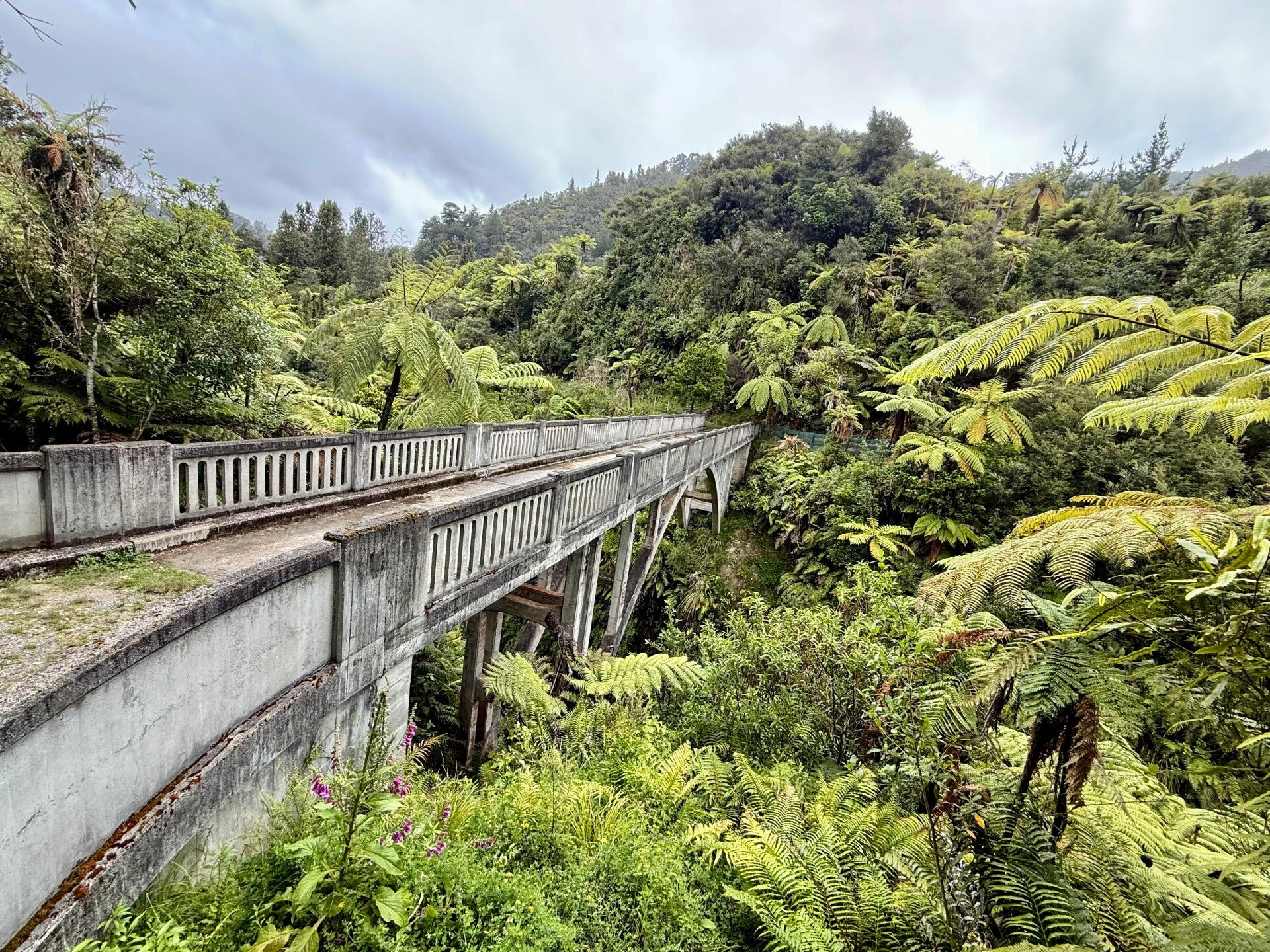
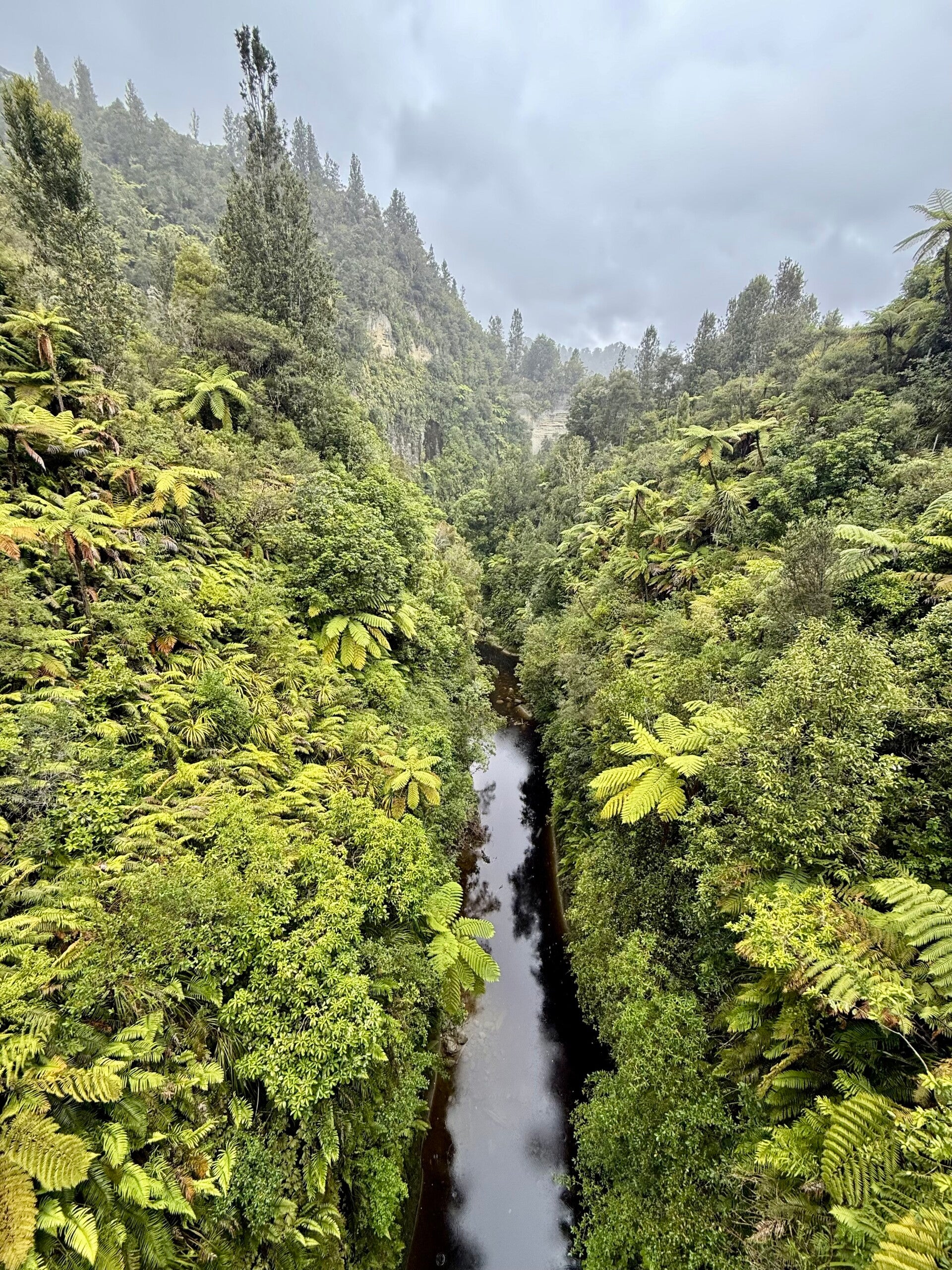
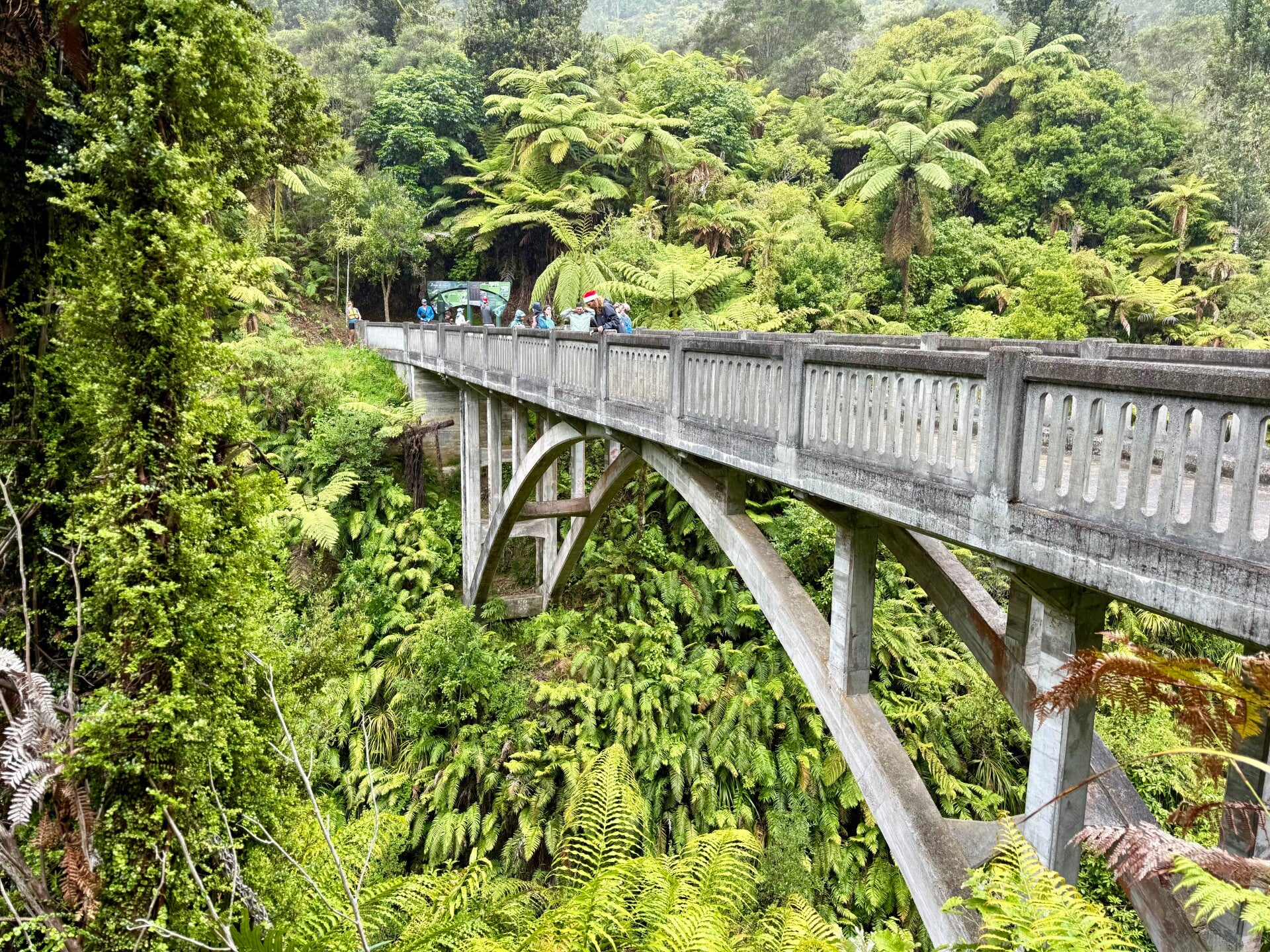
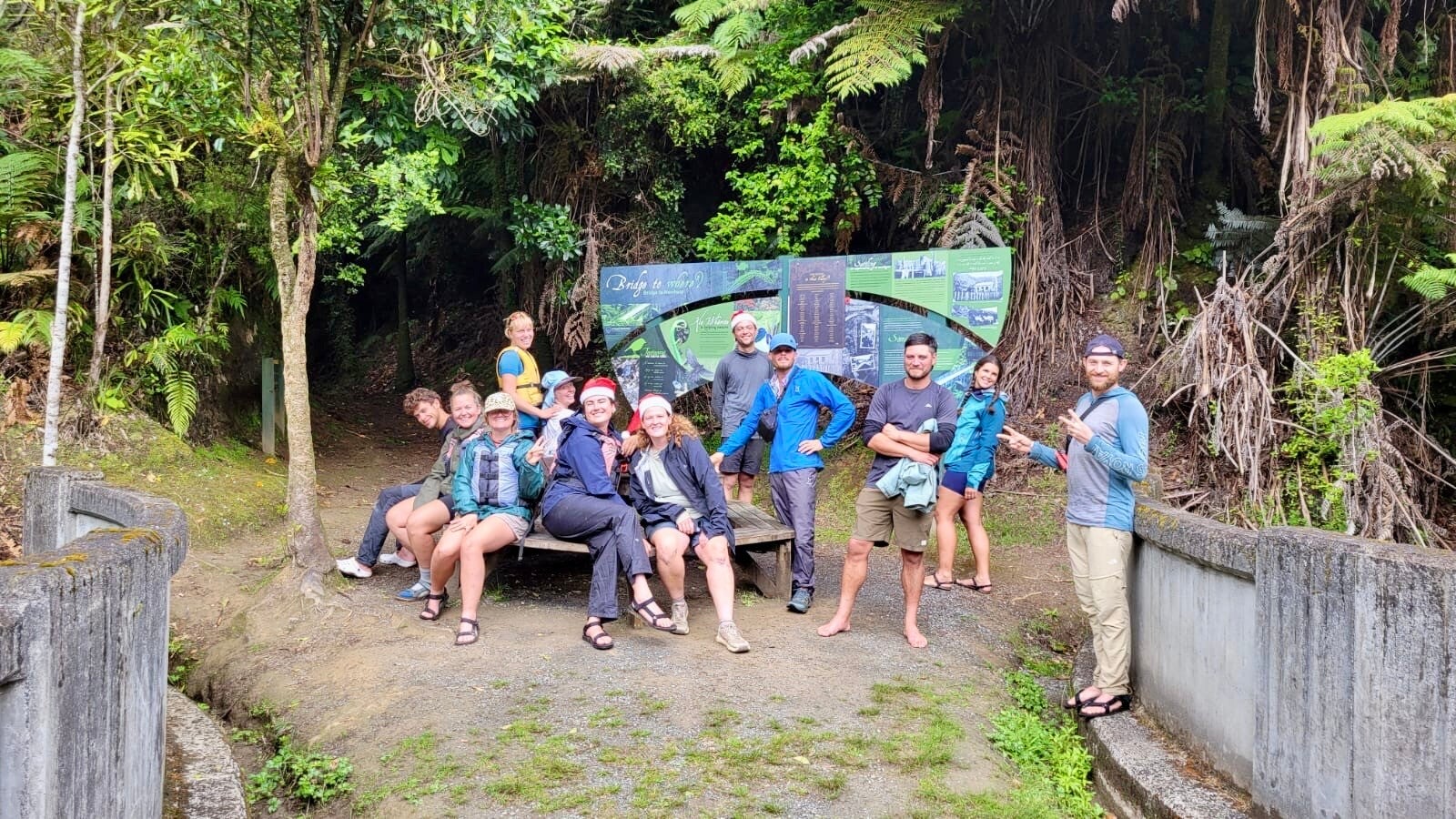
After about thirty kilometers, we have the option of mooring the canoes to hike for a good hour to reach "the bridge to nowhere." And indeed, in the middle of nature, a large concrete bridge spans a gorge, with only a small path through the woods allowing us to continue.
We return to the canoes and finish the remaining 10 kilometers. We spend the evening at another campsite in the pouring rain, but the atmosphere remains wonderful: we have been in the wilderness for two months, so no one seems bothered by the bad weather; we pitched our tents as if nothing is wrong. Thanks to a bit of Wi-Fi, I discover I am an uncle, as my sister had just had her second child, a beautiful little girl named Léa.
Welcome to the world, Léa. I hope you'll appreciate the beauty of nature; it's what warms the heart the most.
🗓️ December 20, 2025
🏁 Kilometers : 1349
Day three on the Whanganui River, with more mixed weather. Once our gear is packed, the barrel dance begins: each day we have to carry all our barrels down from camp to the riverbank and harness them to the canoes. Then we can head out and let ourselves glide along the water; although the number of rapids has decreased considerably, we have to paddle twice as hard.
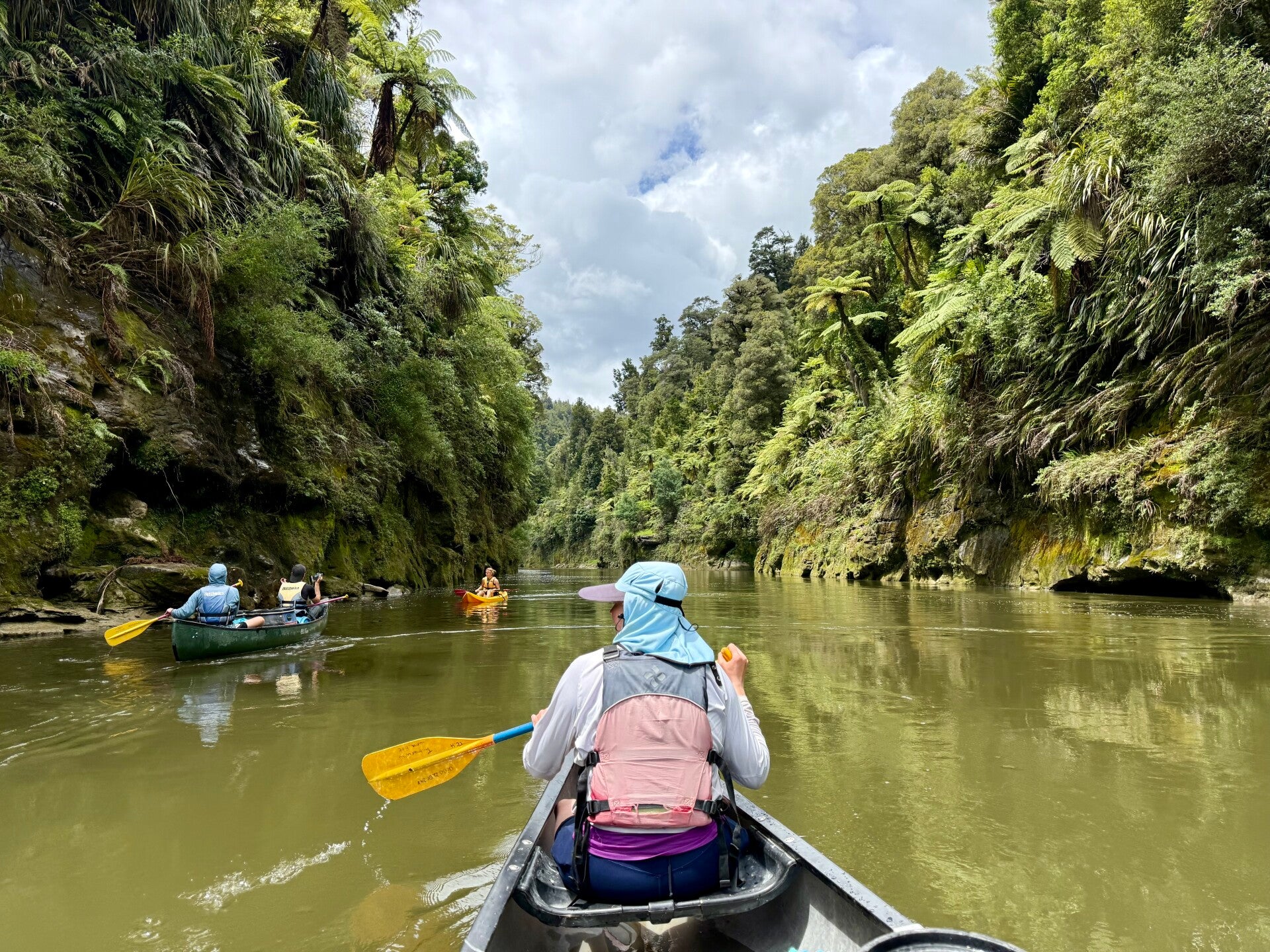
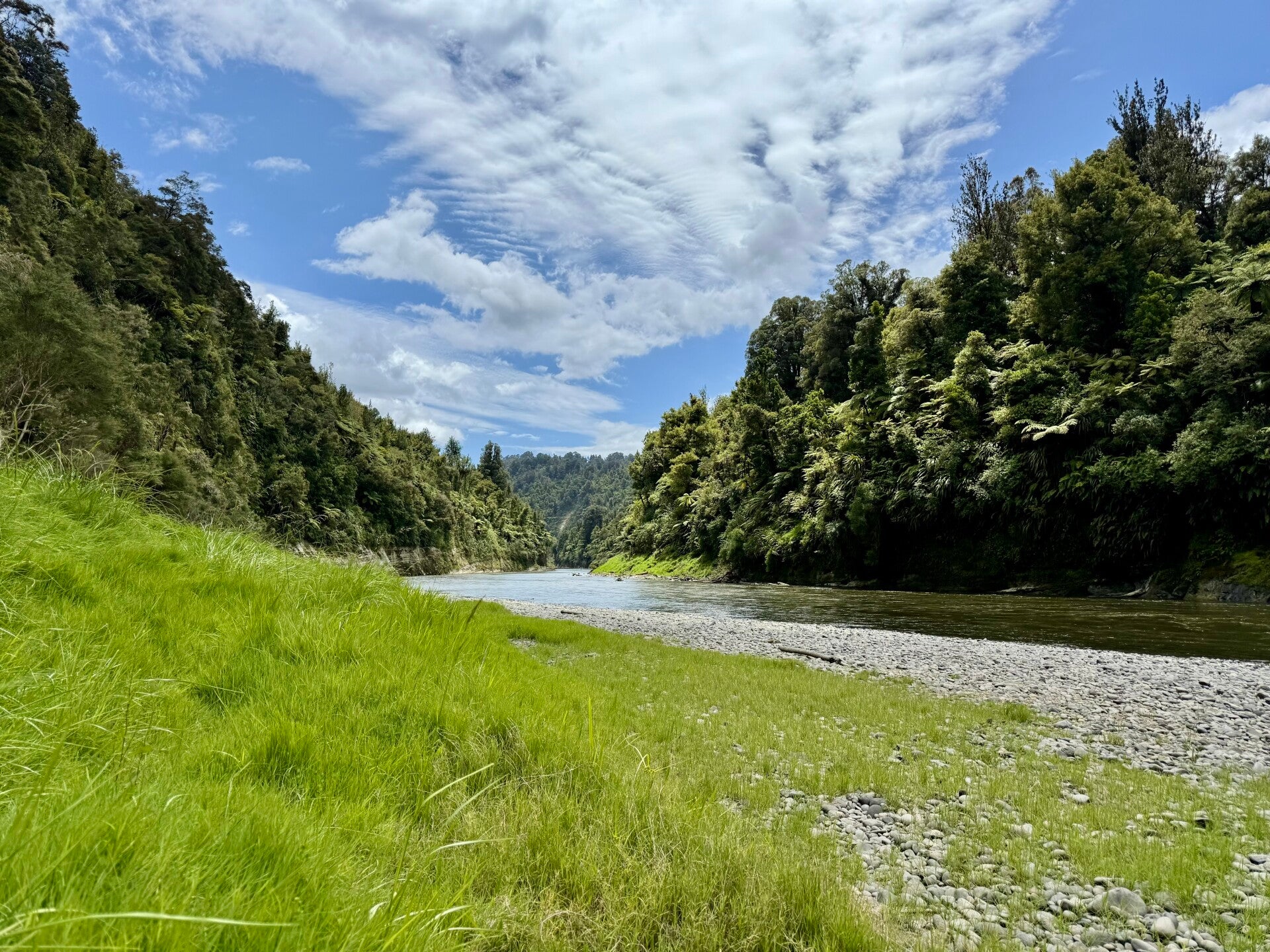
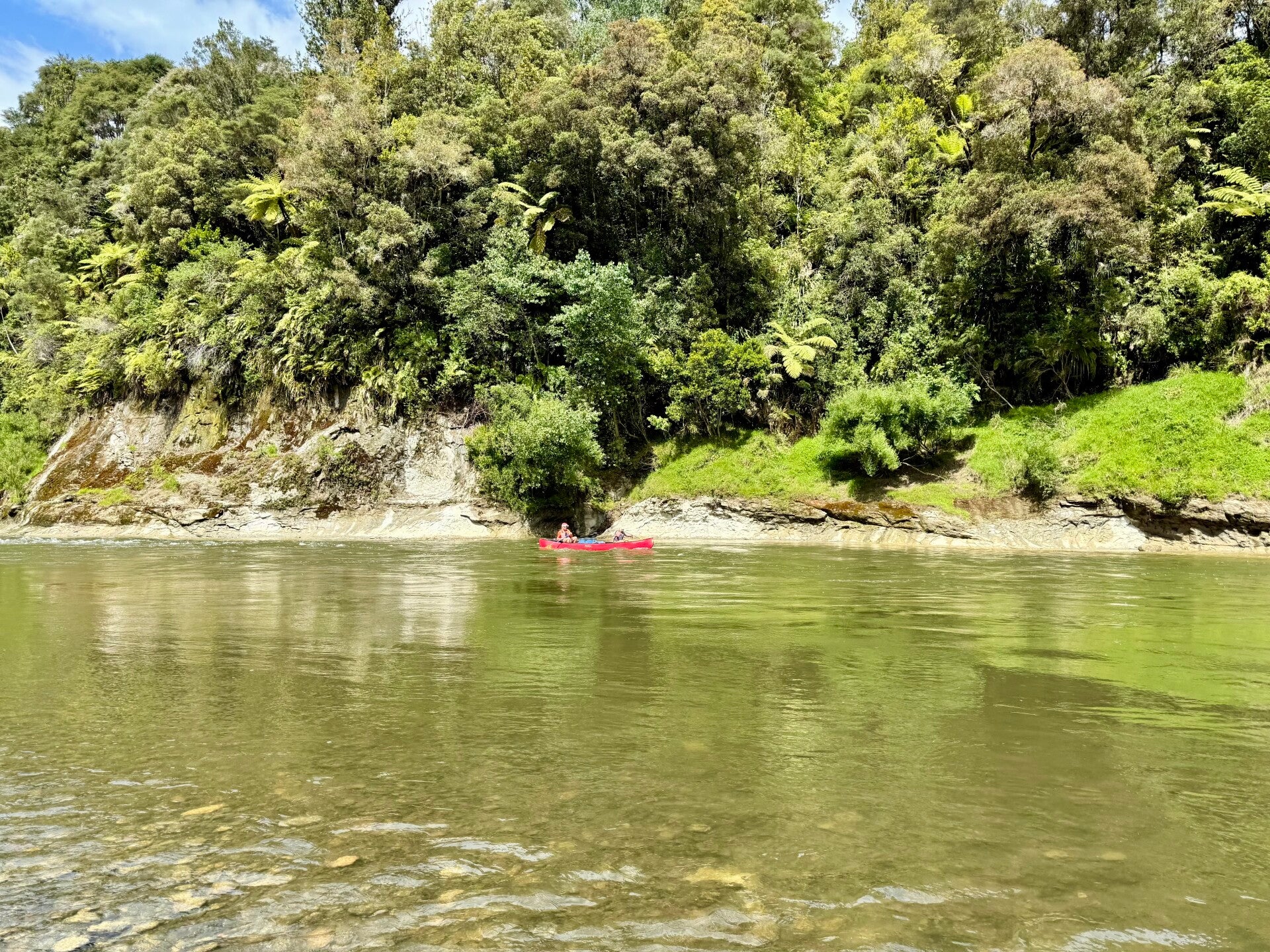
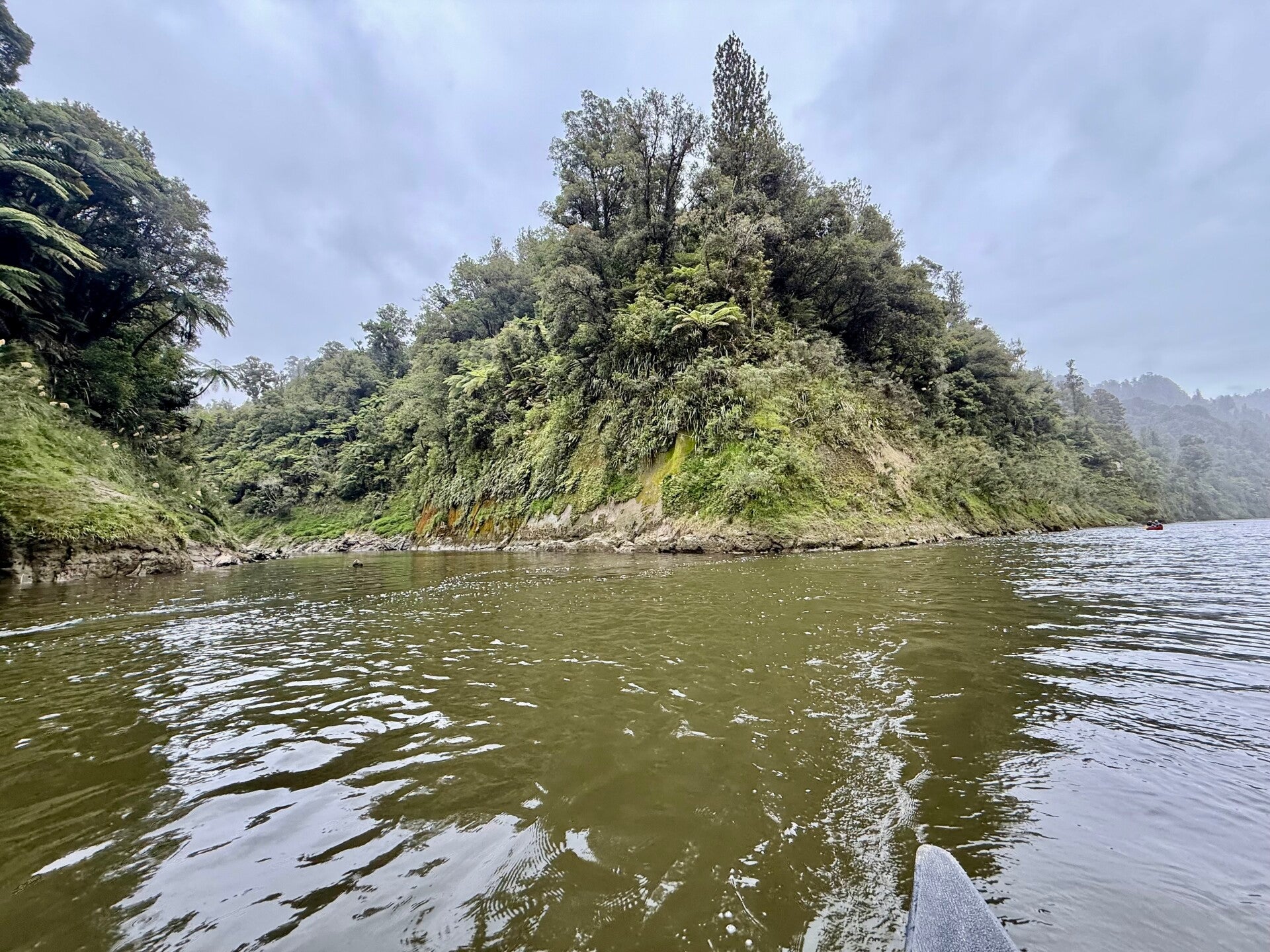
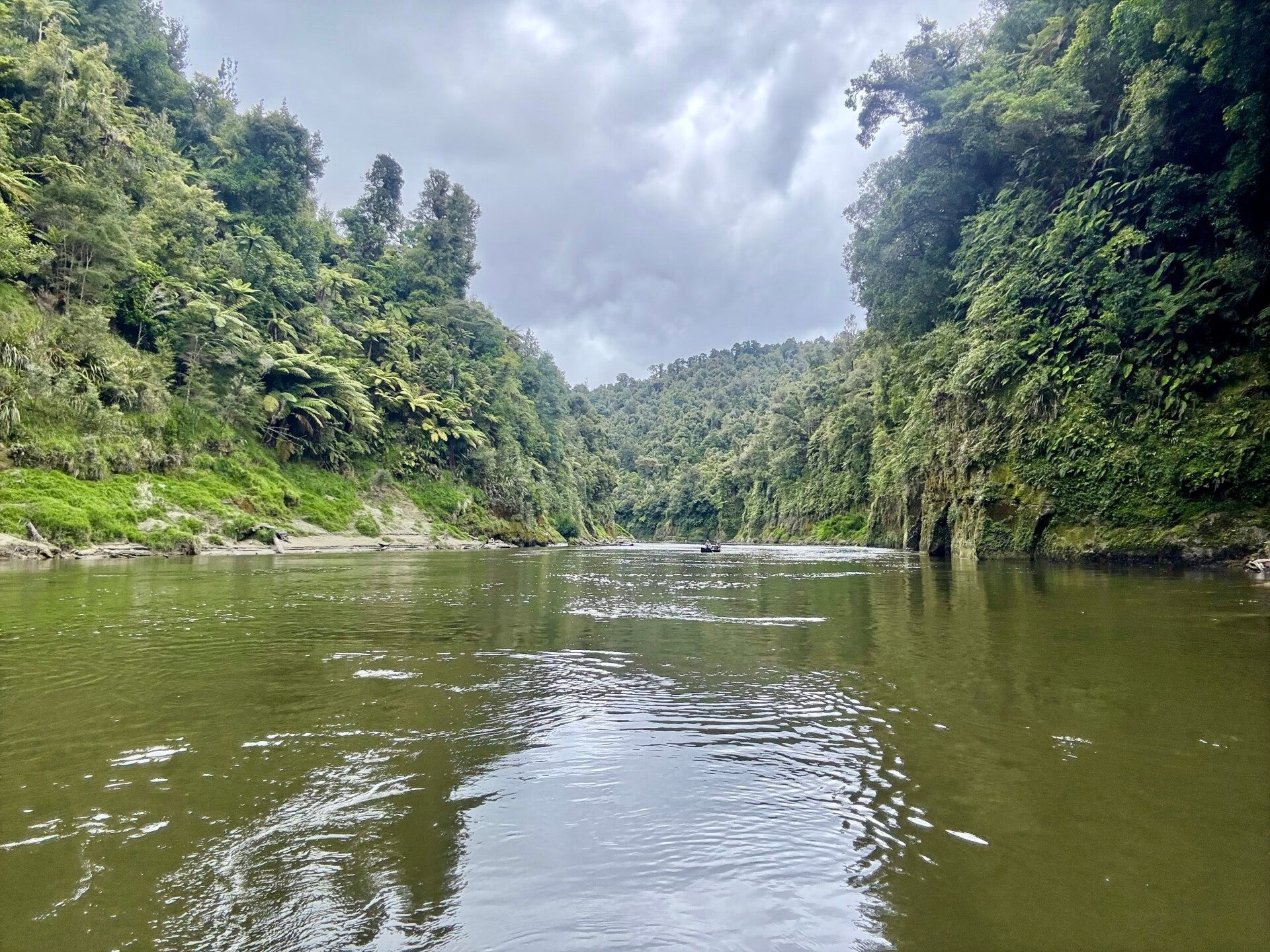
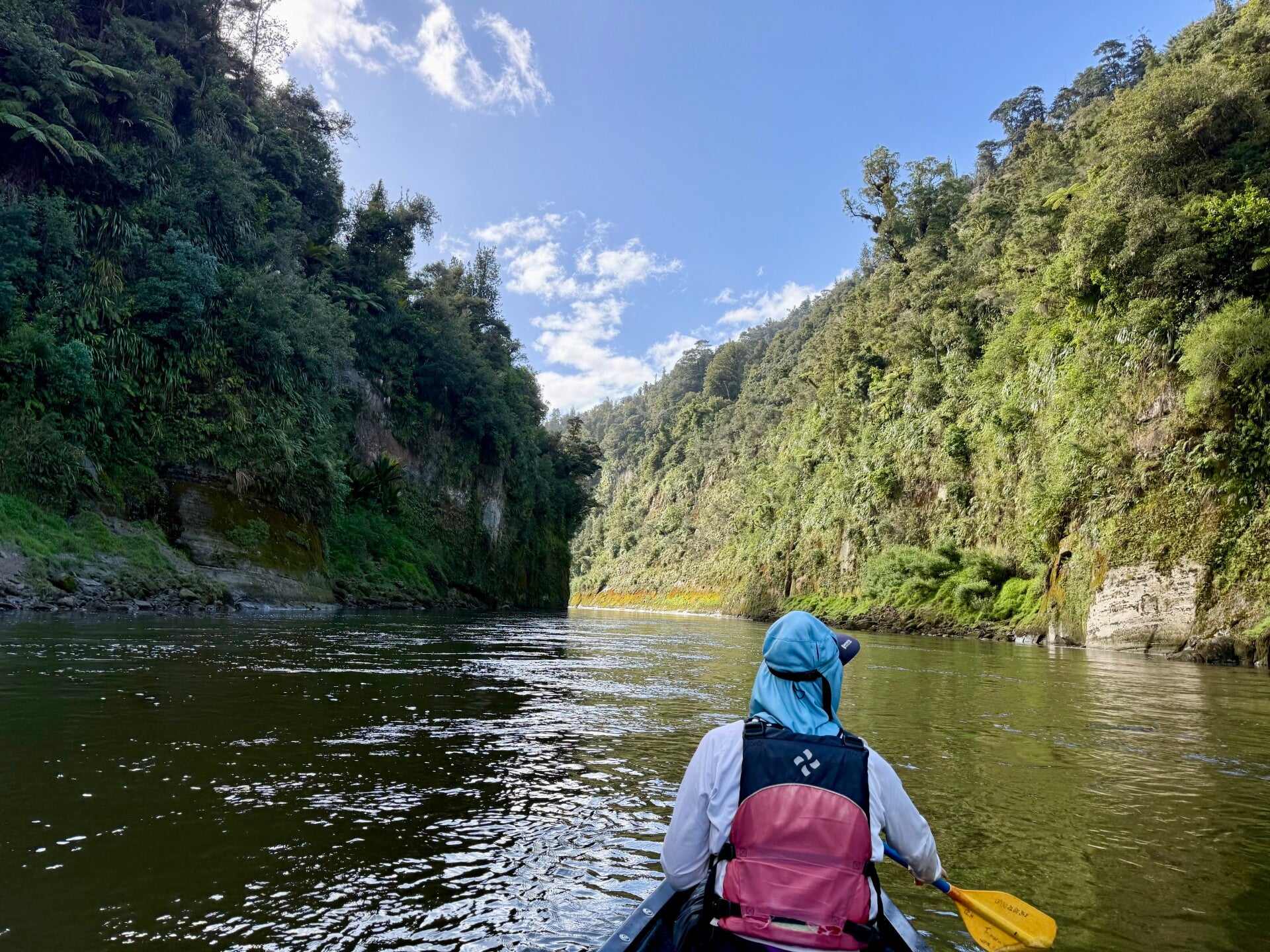
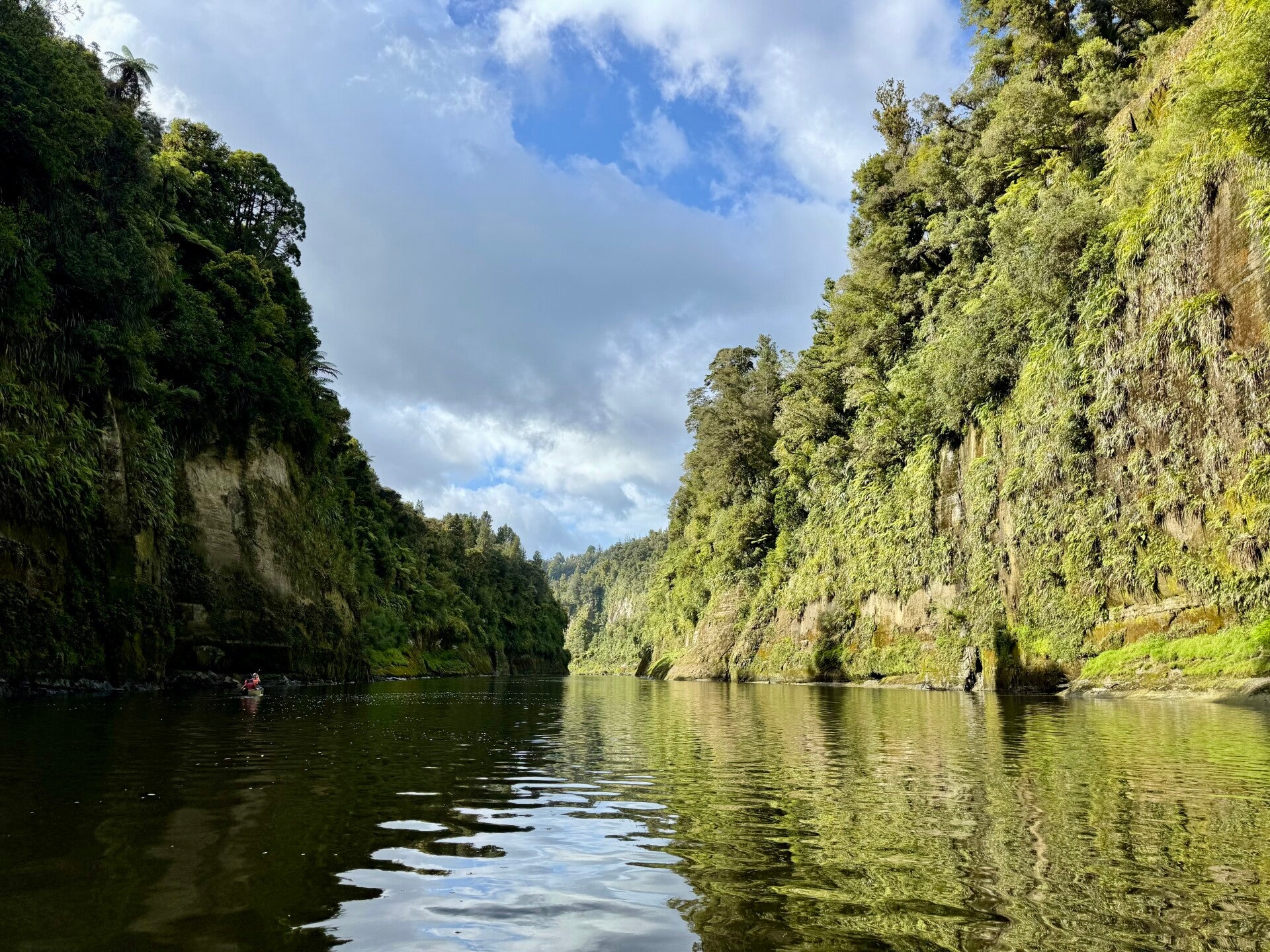
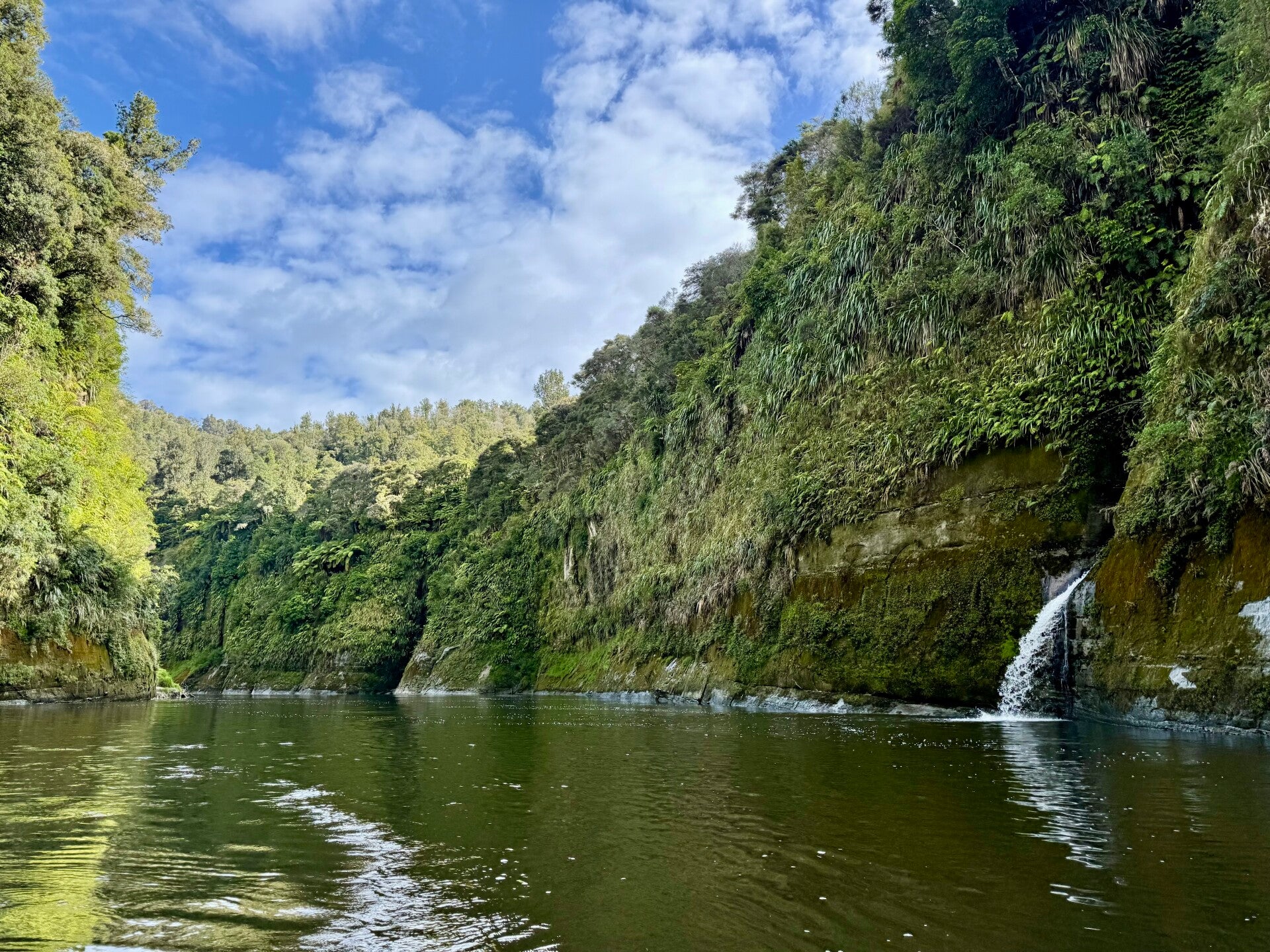
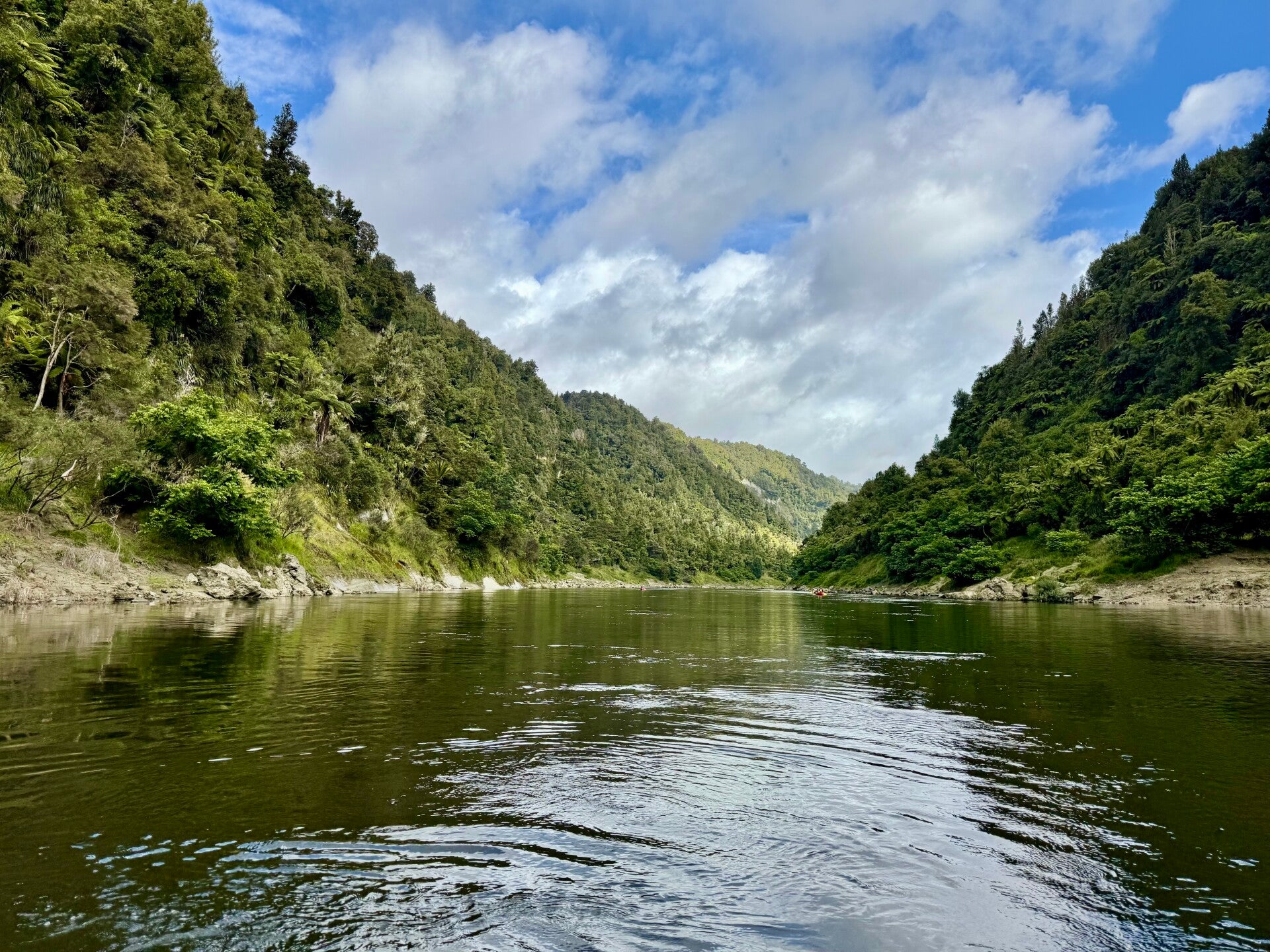
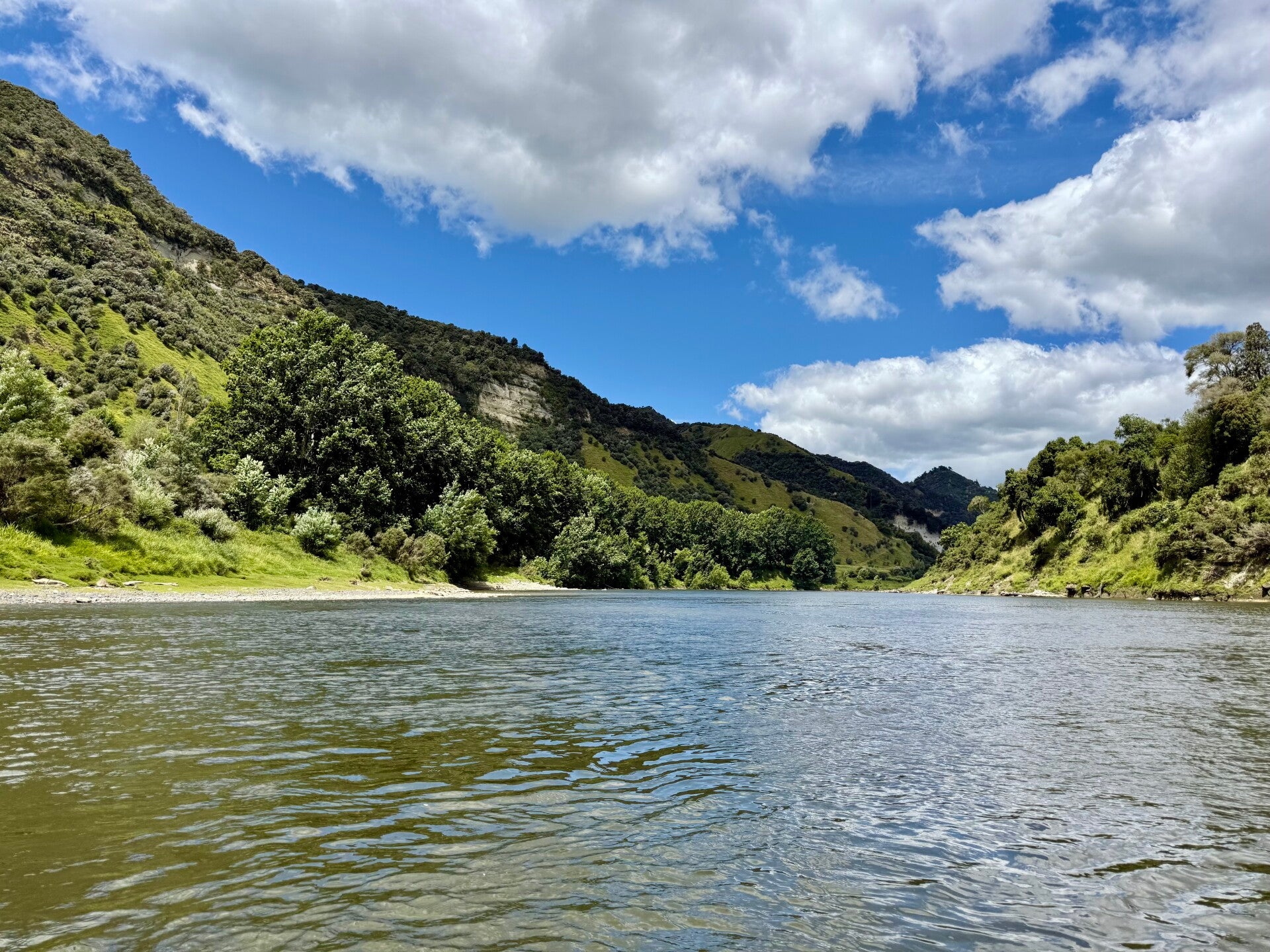
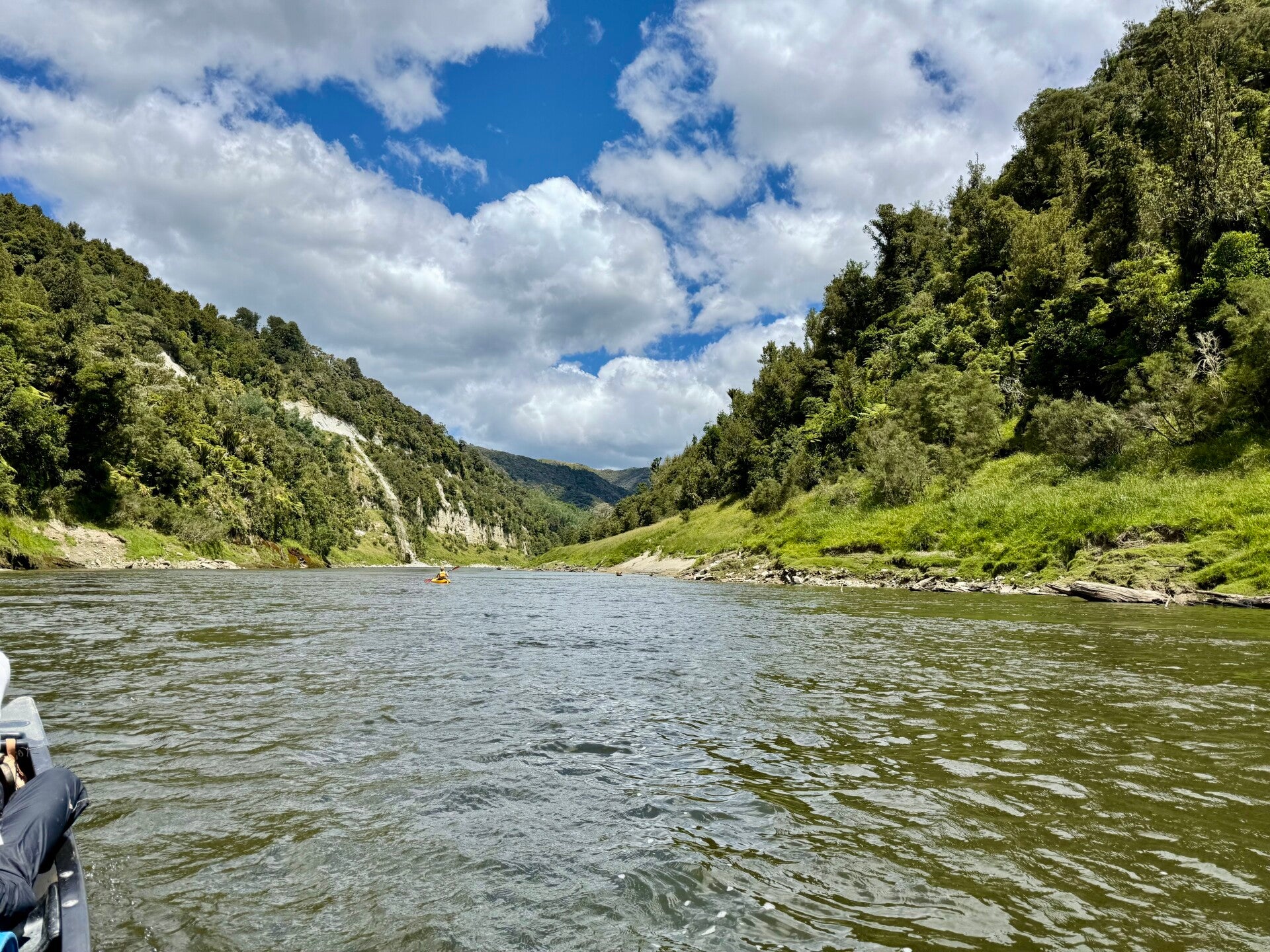
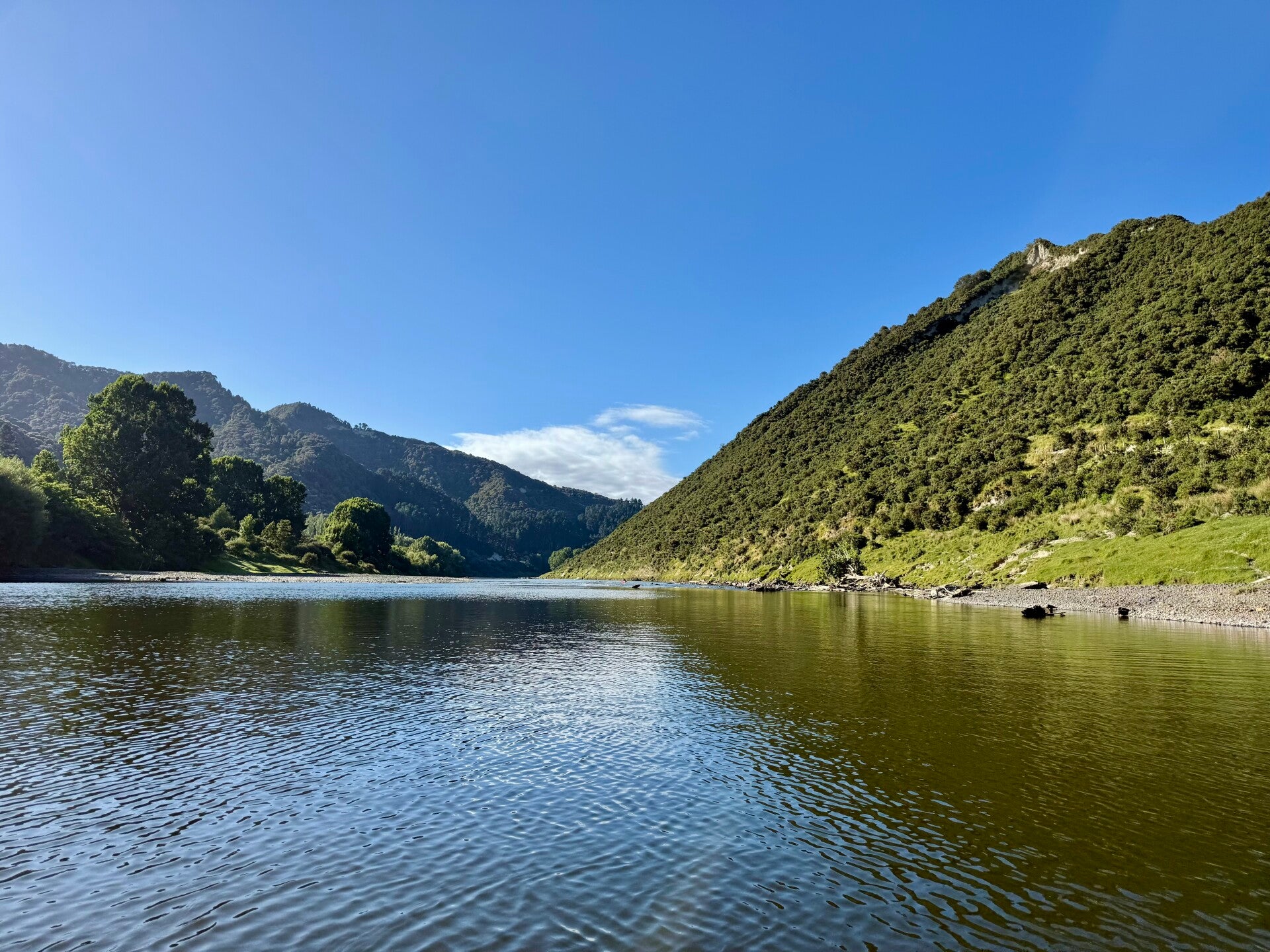
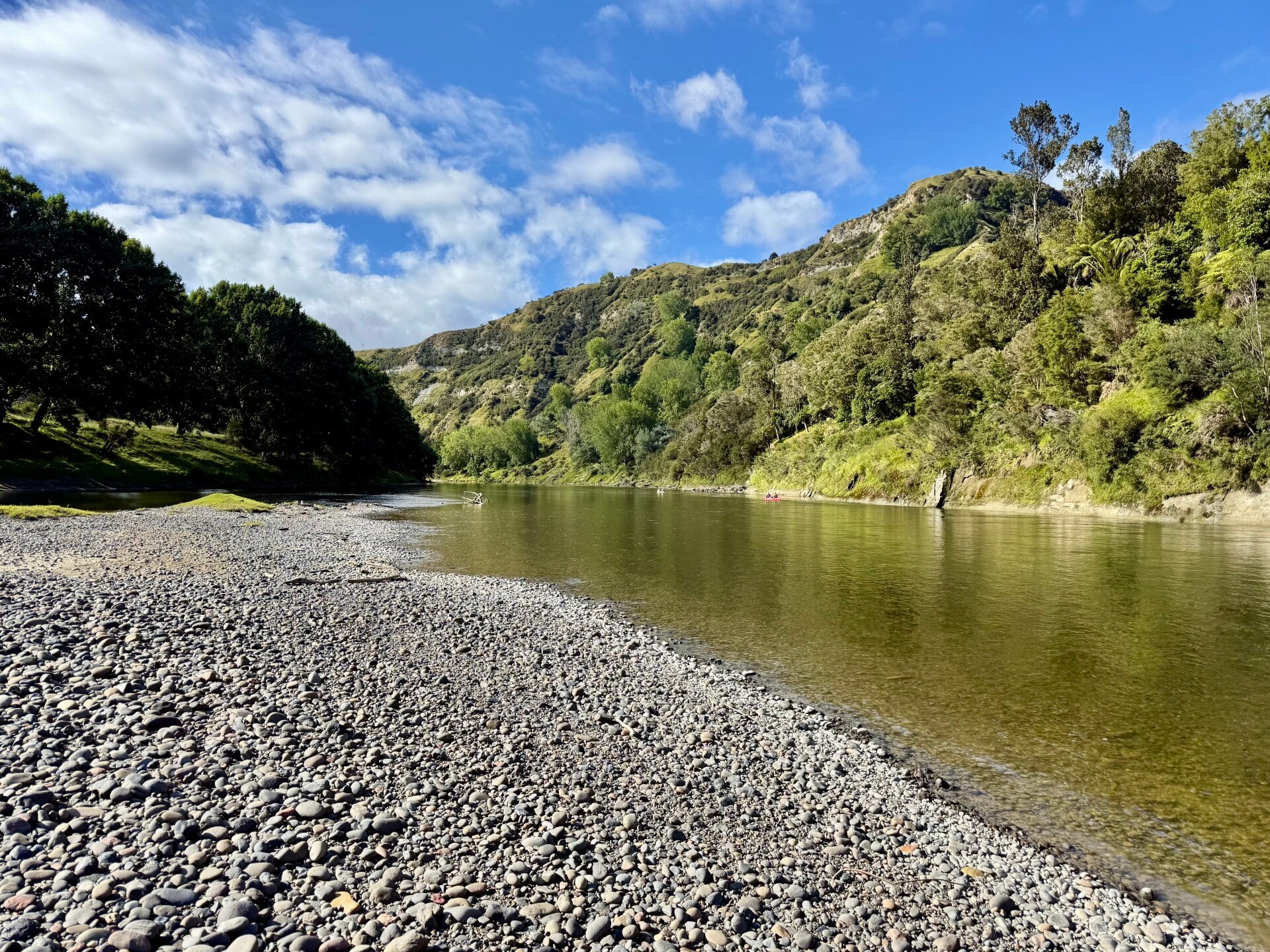
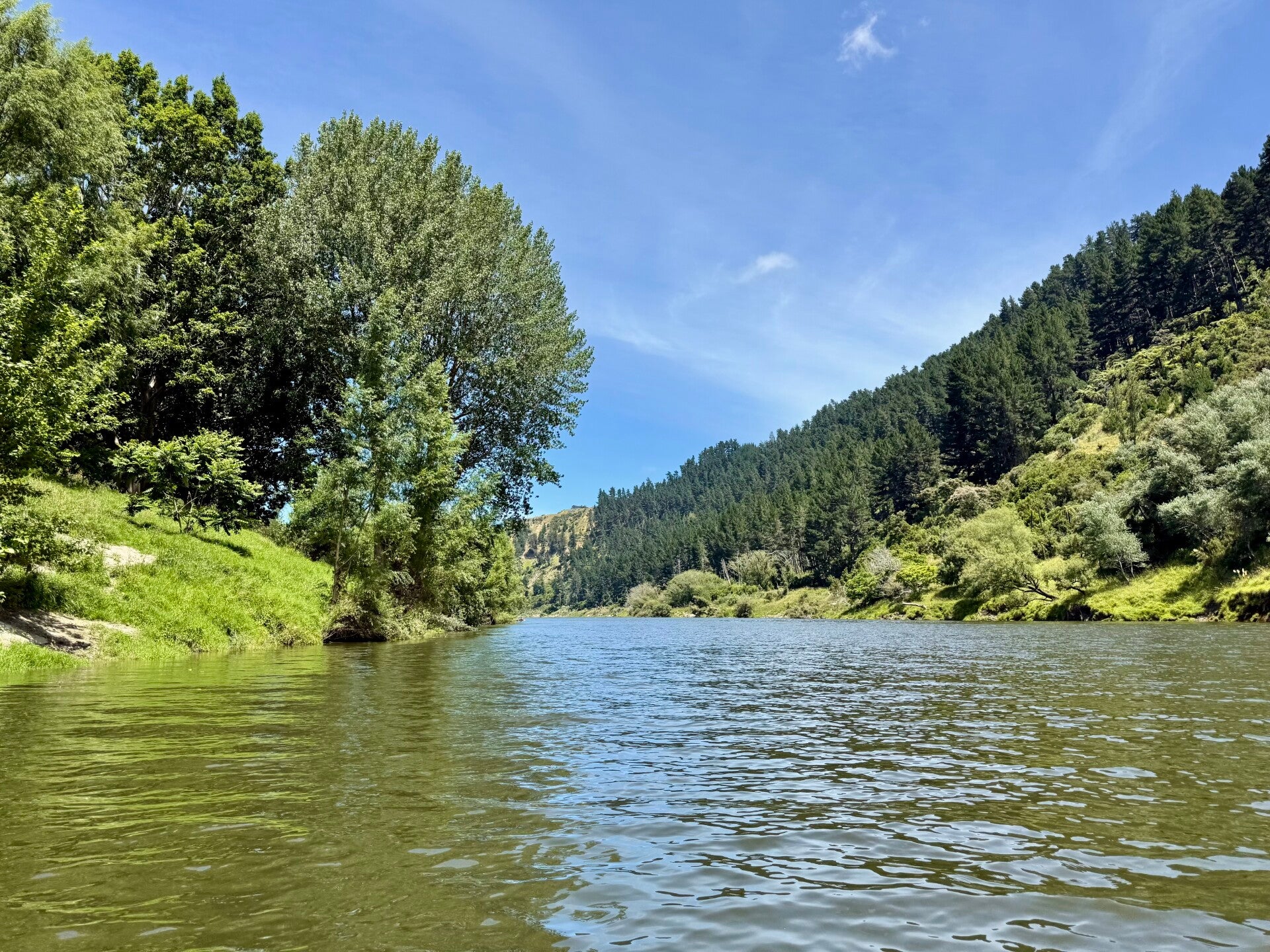
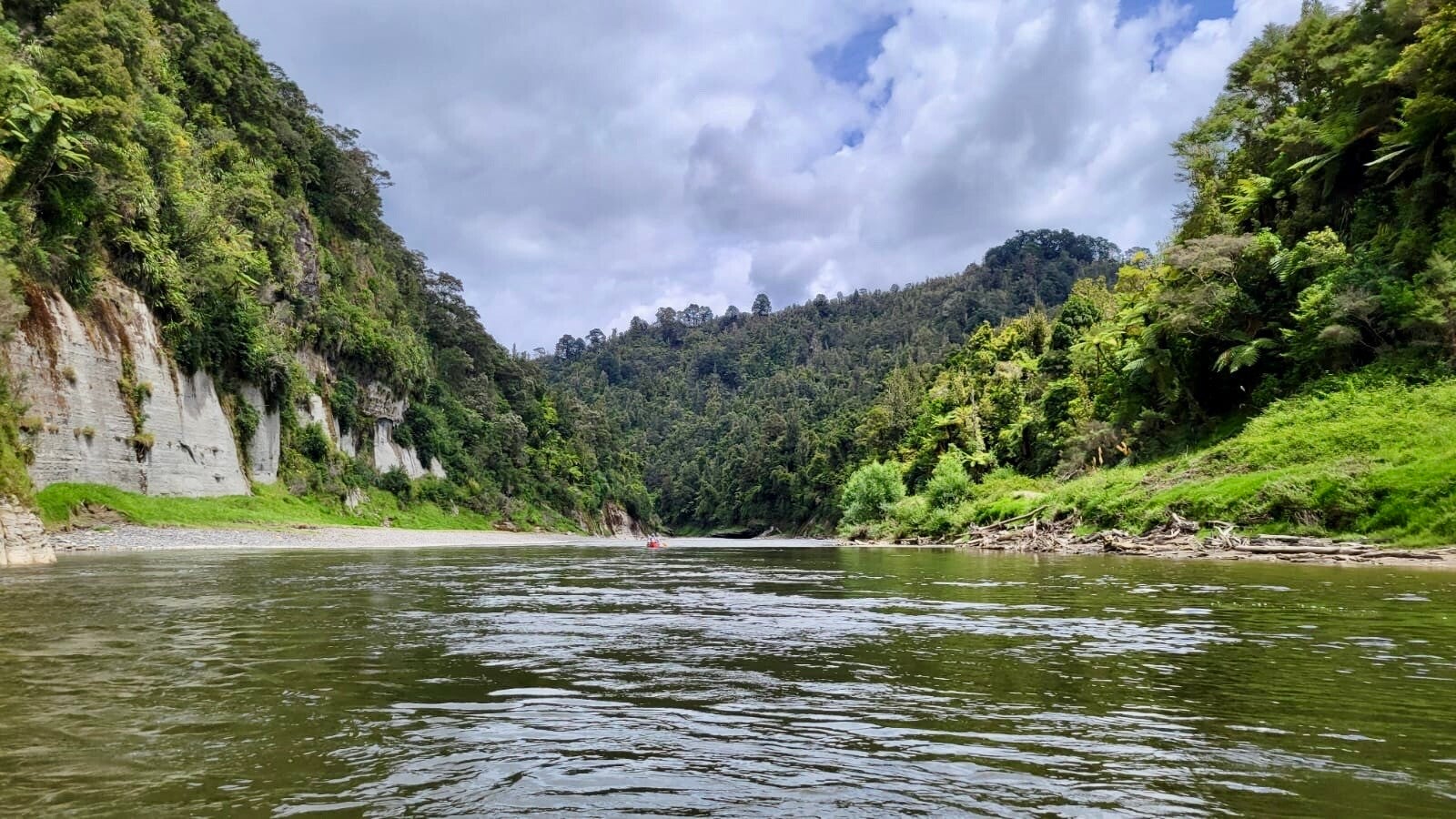
I haven't yet described the scenery, and what a marvel it is! Confined to deep gorges, the river flows tightly between two veritable walls of very crumbly clay and silt that rise high and smooth, often covered with lush vegetation. The height of the cliffs often varies between 20 to 50 meters, but can sometimes reach a hundred meters. Numerous waterfalls plunge, carving incisions along the walls, between two faults, or directly into the river, a feast for the eyes ! Beyond and all around, the forest rises up, almost like an impenetrable jungle.
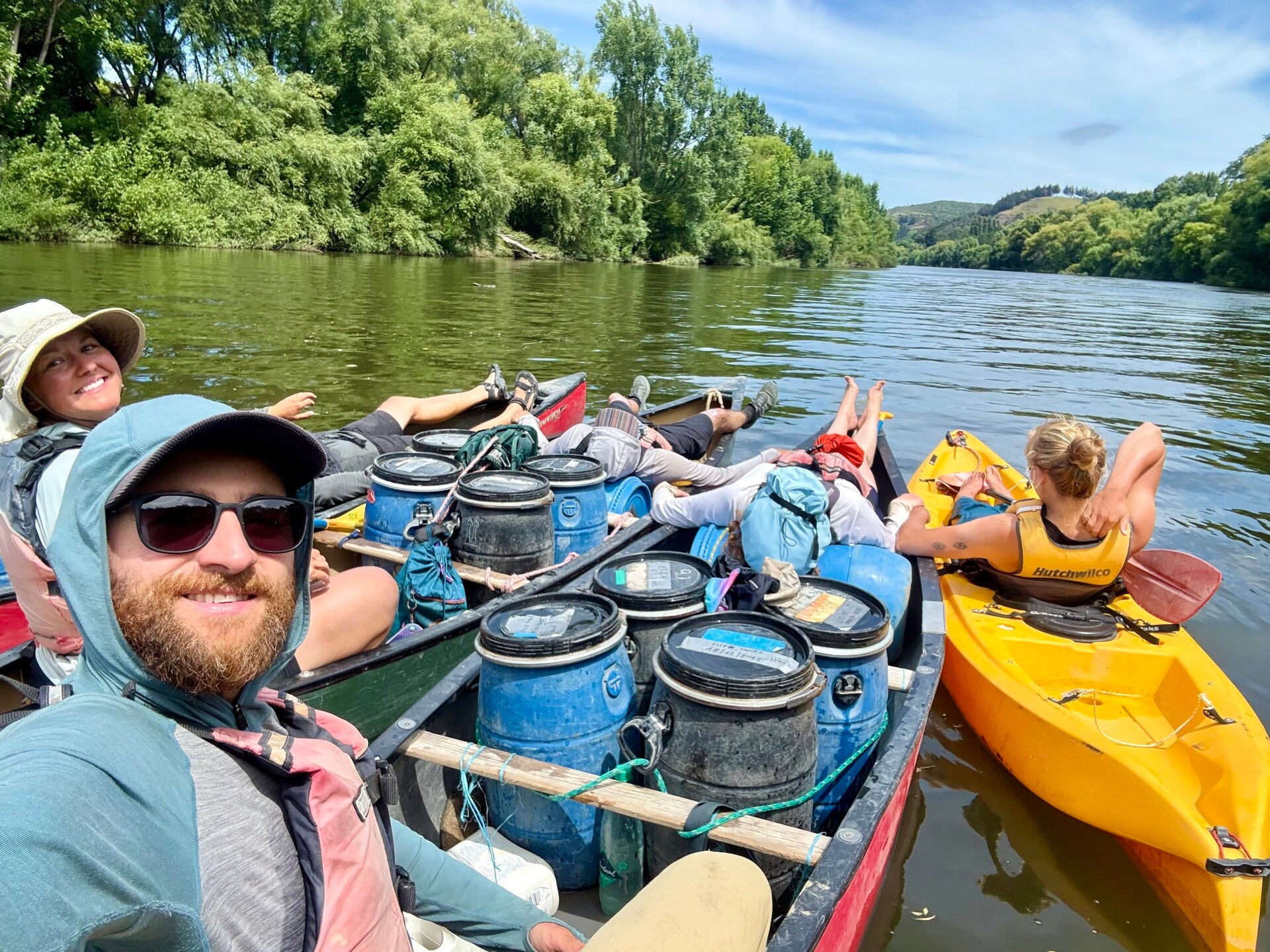
As we drift along in a state of semi-rest, one of us starts playing music on his phone, we have the idea to link our canoes together, so that four boats move forward together, those in the middle holding the outer boats, which continue paddling smoothly. Within this group, it's easy to forget the passage of time and the notions of yesterday and tomorrow; only the present moment is lived and savored, giving a slight feeling of returning to adolescence. I feel good with my companions, whose spirits are joyful and innocent. It's satisfying not to think about tomorrow, living each day surrounded by nature, in such an organic way of life: walking (in this case, paddling) - pitching the tent - cooking - sleeping, and that's all.
After about fifteen kilometers, we approach rapids renowned for being the most technically challenging to navigate on the Whanganui River, one in particular nicknamed "50/50," and for good reason: half of us capsize, including my partner. Ellen and I have got a particularly heavy canoe because we are carrying barrels for someone else in a single kayak. Large waves leave us no chance and fill our boat in one go, but we still manage to stay aboard and continue paddling underwater. The boat remains just below the surface thanks to the barrels, which keep it afloat, provoking general hilarity at the comical situation.
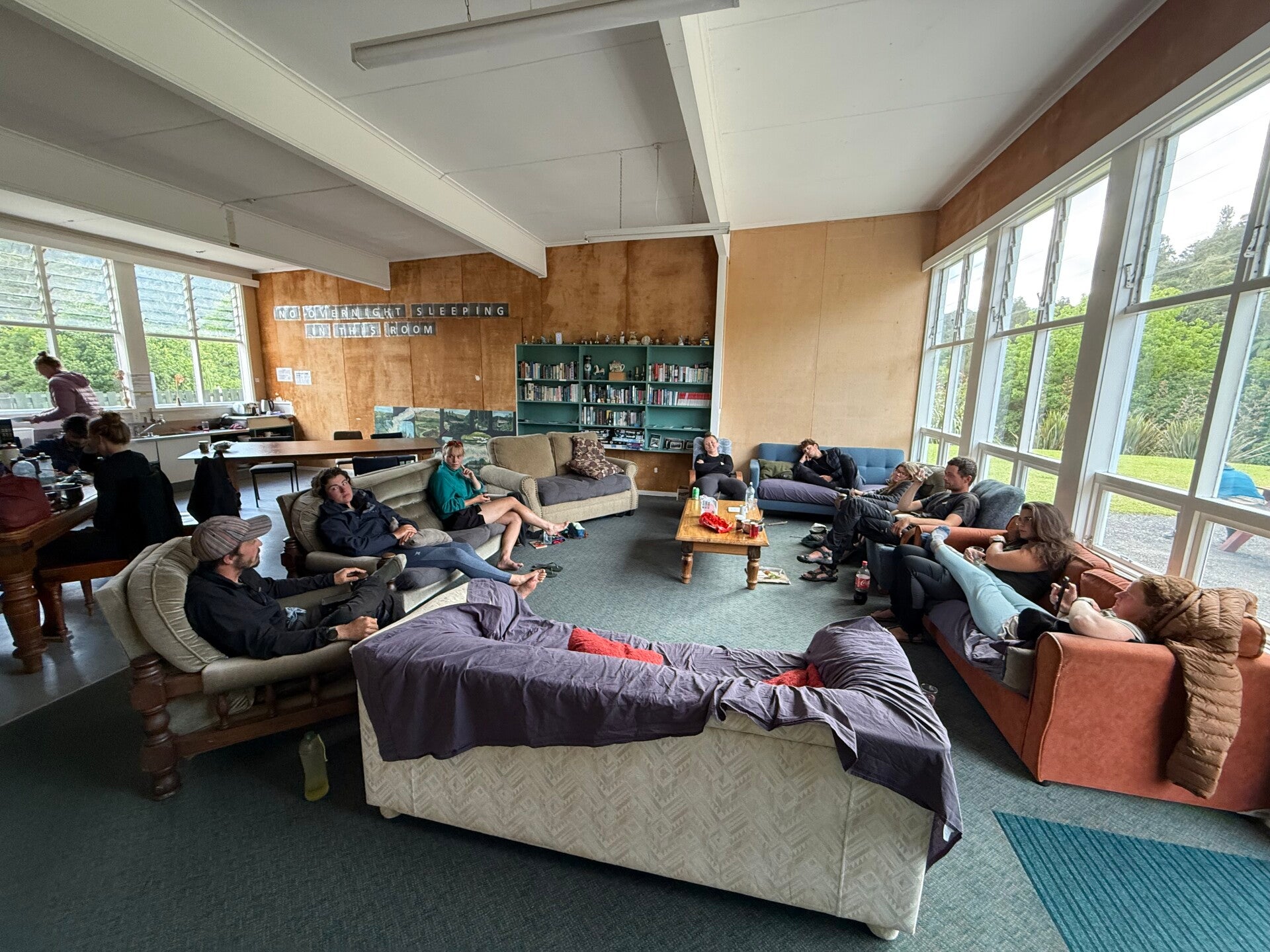
Some of us haul the boats up onto the nearby pebble beach to try the rapids again, just for the thrill of capsizing once more. But after a few laughs, the wind picks up and, soaked to the bone, we start to get cold. We head to our camp, where we have a common room to spend the day, a hot shower, Wi-Fi, and even some food.
We end the day sitting in a circle in the dozen or so armchairs and sofas, laughing and putting the world to rights, in a refreshingly friendly atmosphere.
🗓️ December 21, 2025
🏁 Kilometers : 1387
Fourth day on the Whanganui River. We have 38 kilometers to cover today. The weather is a bit more forgiving, overcast but no rain. The few rapids we have to navigate today are fairly straightforward, but one of them, skirting the trees, causes a pair to lose their balance and capsize. We are very well organized now to help each other, even though we have a bit of trouble righting the boat, knowing that our feet are sinking up to our knees in a mixture of mud and clay. Good spirits continue to prevail, though our muscles are starting to ache. We spend the night in a simple campsite.
Another 43 kilometers to go and then we can rest for three days to celebrate Christmas :)
🗓️ December 22, 2025
🏁 Kilometers : 1432
Fifth and final day! We wake up early in the freezing cold by the river and have to carry our barrels down a steep slope to tie them to the canoes—a difficult task. When the sun reaches the river, it quickly warms us, and we almost miss the morning chill! We have two stages to complete. The first is 25 kilometers to reach point zero, where the river meets sea level, which we reach around noon. For the second part, we have to wait until 1 p.m., the end of the incoming tide, to avoid paddling the last 20 kilometers against the current. Our destination is the town of Whanganui, which we reach around 4:30 p.m. We are all exhausted and relieved to be rid of our boats. The campsite for the night is right across the river.
We covered a total of 170 kilometers in five days, to put into perspective roughly the distance between Liverpool and Birmingham United Kingdom or Montpellier and Marseille France.
Add comment
Comments